
EU’s first hydrogen pipeline to connect Portugal, Spain, France
The leaders of Spain, Portugal and France have unveiled the H2Med energy interconnection project, which will supply Europe with hydrogen. H2Med, formerly known as BarMar, will be the first green corridor to connect the Iberian Peninsula with the rest of Europe. It will be operational in 2030.
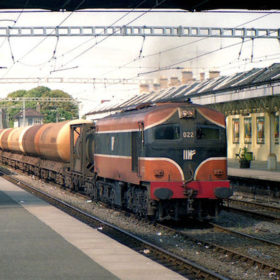
The Hydrogen Stream: Germany opens Europe’s first green ammonia tender
Germany has announced plans to sign long-term green ammonia purchase agreements, in addition to strengthening its ties with Australia. Repsol and Fusion Fuel, meanwhile, are advancing their hydrogen projects on the Iberian Peninsula.
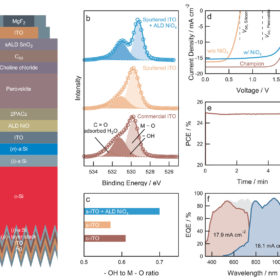
Monolithic perovskite-silicon tandem solar cells for water splitting
Researchers in the Netherlands have designed a water-splitting system with an electrochemical cell and a 25%-efficient tandem perovskite-silicon solar cell. It can reportedly achieve a solar-to-hydrogen efficiency rating of more than 21%.
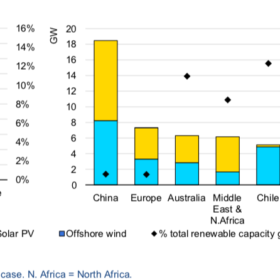
The Hydrogen Stream: Global renewables capacity for hydrogen to surge by 2027, says IEA
The International Energy Agency says that it expects the use of renewables to support global hydrogen production to surge over the next five years. The Netherlands and Denmark, meanwhile, have revealed plans to expand electrolysis capacity.
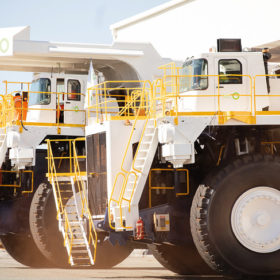
Weekend read: Shining magnate
Mining magnate Andrew “Twiggy” Forrest is the founder and executive chair of Australian iron ore producer Fortescue Metals Group. The company has announced an ambitious $6.2 billion decarbonization strategy and its Fortescue Future Industries subsidiary has rapidly become a global player in green hydrogen, along with a host of other energy transition technologies. Whether it is pushing to decarbonize mining, hashing out headline-making green energy deals, or using the popular “Rick and Morty” cartoon to educate people about the potential of green hydrogen, Fortescue and its shining magnate are talking the talk. But can they walk the walk? Blake Matich reports.
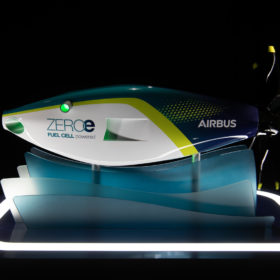
The Hydrogen Stream: Airbus, Honda bet on hydrogen-powered fuel cells
Airbus sees hydrogen-powered fuel cell engines as a potential solution for its zero-emissions aircraft, which will go service by 2035. Meanwhile, Honda, meanwhile, has announced plans to produce fuel cell electric vehicles in the United States from 2024.
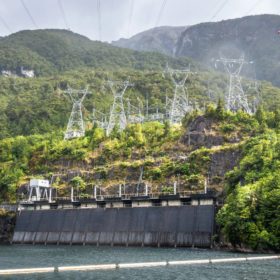
Woodside selected to deliver green hydrogen megaproject in New Zealand
Australia-based Woodside Energy has beat Fortescue Future Industries for the opportunity to deliver the proposed 600 MW Southern Green Hydrogen megaproject in New Zealand. It will produce green hydrogen for export using power from partner Meridian Energy’s hydroelectric plant.
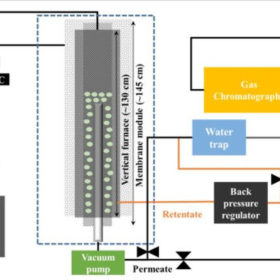
The Hydrogen Stream: Green hydrogen via ammonia decomposition
South Korean scientists have developed a highly selective palladium composite membrane on porous metal supports to cut the ammonia content of the permeated hydrogen stream. Dutch researchers, meanwhile, have presented two alternatives to this strategy – increasing the thickness of the membrane selective layer, or using a purification unit in the permeate of the membranes.
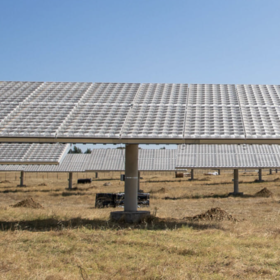
Portuguese company to build 75 MW solar-to-hydrogen facility in California
A proposed 75 MW solar-to-hydrogen facility in California could mark the start of Fusion Fuel’s green hydrogen vision for the United States.
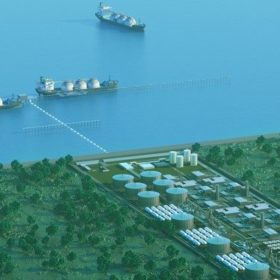
The Hydrogen Stream: TES, EWE plan 500 MW electrolyzer in Germany
A group of German companies plans to set up a 500 MW electrolyzer for a 1 GW green hydrogen project in the North Sea. US scientists, meanwhile, have engineered a light-activated nanomaterial to convert ammonia into hydrogen, and Canadian researchers have unveiled a new way to structure catalysts for fuel cells.
