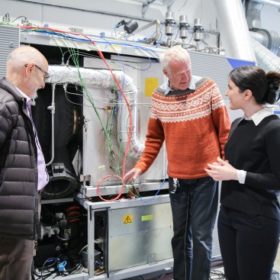
World record in hydrogen combustion in micro gas turbines
Scientists in Norway have managed to run a micro gas turbine plant on pure hydrogen. They claim their experiment paves the way for the use of existing infrastructure to generate heat and power with the green fuel.
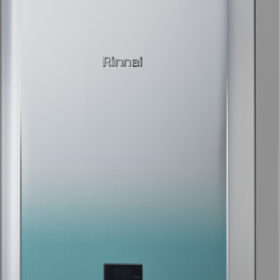
Hydrogen combustion tech for residential water heaters
Japan’s Rinnai has unveiled what it claims is the world’s first 100% hydrogen combustion technology for residential water heaters. It is currently using the hydrogen water heater in demonstration projects in Australia, prior to commercialization.
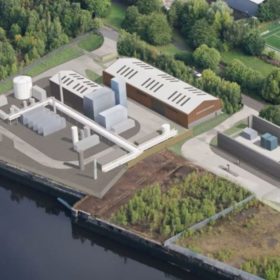
The Hydrogen Stream: Project to produce hydrogen from waste plastic takes shape in the UK
In other news, Plug Power revealed plans to build a 35-ton-per-day green hydrogen generation plant at Belgium’s Port of Antwerp-Bruges and UK researchers developed an artificial leaf device made from bismuth oxyiodide that is able to harvest sunlight to produce hydrogen fuels.

EU energy fund to commit $514 million for solar projects at Romanian mining waste sites
Panels will be installed at waste sites in five mining towns as part of the latest, €2.4 billion ($2.57 million) round of investment from a fund set up to help coal-dependent European member states with the energy transition.

Construction begins on 650 MW solar park in Germany
The facility is set to become the largest solar plant in Germany and Europe. The project is expected to support agricultural activities and might also be used for green hydrogen generation.
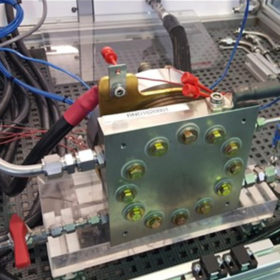
Novel stack design for PEM electrolyzers promises lower production costs
Researchers in Germany have built bipolar plates for electrolyzer stacks without using titanium, which they claim may further reduce green hydrogen costs. They used coated stainless steel and niobium for the stack coating and found these new materials do not affect electrolyzer performance.
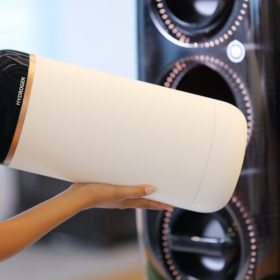
The Hydrogen Stream: Hydrogen cartridges for daily life applications from Toyota
Toyota starts testing hydrogen cartridges for use in mobility, household applications in Shizuoka Prefecture. Meanwhile, China’s Shaanxi Normal University designed an aerogel method to substitute platinum with ruthenium in electrocatalytic water splitting, the US Department of Energy (DOE) is getting closer to fund the Bipartisan Infrastructure Law’s $8 billion program, and UAE-based companies are stepping up cooperation with Azerbaijan, Japan and South Korea.

The Hydrogen Stream: Hydrogen system for marine vessels
DNV approved HAV Group’s hydrogen-based energy system for cruise vessels, Rolls-Royce agreed to sell hydrogen-powered mtu fuel cell solutions in Germany, and the Mauritanian government signed a deal with CWP to develop a 30 GW green hydrogen project.
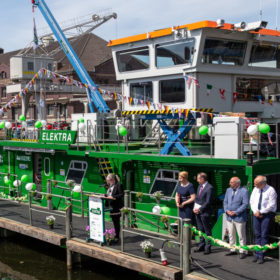
The Hydrogen Stream: World’s first hydrogen-powered towboat
Shipbuilder Hermann Barthel has developed the world’s first push boat to combine battery-electric propulsion with hydrogen and fuel cell technology. Iberdrola and Fertiberia, meanwhile, have commissioned Europe’s largest green hydrogen production plant.
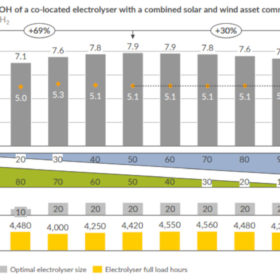
Green hydrogen price may drop to €5 kg by 2025
Aurora Energy Research says in a new report that maximum green hydrogen project profitability could be achieved when solar and wind power plants are combined with electrolyzers.
