The EU plan to drastically ramp renewables to replace Russian gas
The European Commission yesterday announced its intent to remove demand for two-thirds of its Russian gas supply in less than nine months and hugely accelerating the rate of solar deployment is a central part of its radically raised clean energy ambition.
The Hydrogen Stream: Ukraine invasion raises price of gas-powered grey ammonia
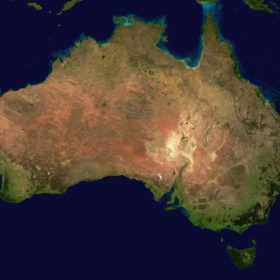
With fears over Europe’s gas supply tightening, the Australian government is forging ahead in the green hydrogen sector by launching tech incubator HyGate and awarding Volt Advisory Group cash to develop a renewable energy microgrid. Australian business Fortescue Future Industries and Europe’s Airbus will work on hydrogen-powered aircraft and Kawasaki Heavy Industries is making strides in transporting hydrogen from the state of Victoria.

Indian green hydrogen will cost $5/kg
Ratings agency ICRA has estimated Indian green hydrogen will cost that much if produced at sites featuring clean energy generation capacity and electrolyzers. That is between 50 US cents and a dollar per kilogram cheaper than in locations where the two systems are not co-located, with the saving possible due to a reduction in open-access, intra-state grid charges.
IHS Markit: Battery prices won’t fall until 2024
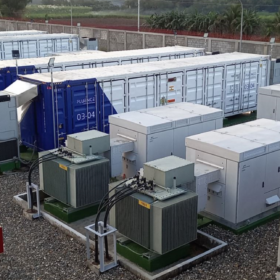
The London-based analyst has published a series of clean tech predictions for the year which also highlighted the rising proportion of sub-5MW solar projects in the global market, and cheaper clean energy financing costs even as panel prices continue to rise.
Scatec joins scaled up Omani green ammonia project
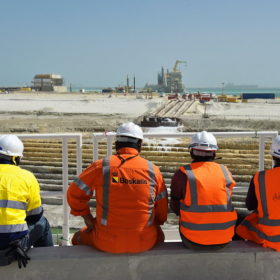
A previous announcement by Acme indicated the port site would be able to produce around 876,000 tons of the green fuel per year but the Indian developer today said that figure would be 1.2 million tons. The 100,000-ton-per-year first phase of the facility may be operational this year.
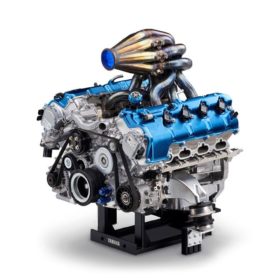
The Hydrogen Stream: Hydrogen-fuelled V8 engine for automobiles from Toyota, Yamaha
In other news, Belgian company Tree Energy Solutions (TES) is accelerating plans to develop the German port of Wilhelmshaven into a “world-scale” hub for importing green gas, and German engineering company MAN Energy Solutions will invest up to €500 million in its hydrogen-focused subsidiary H-TEC Systems.
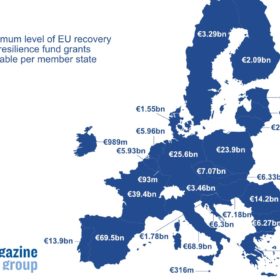
EU member states to spend €18bn of Covid cash on renewables
The 22 nations which have had their “recovery and resilience” spending plans approved by the European Commission are set to devote billions to clean energy facilities, with the cash set to be disbursed in three payments to the end of next year.
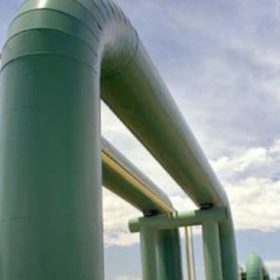
The Hydrogen Stream: World’s largest electrolyzer fab breaks ground in Australia
Fortescue Future Industries says the first electrolyzers to be manufactured at the facility, early next year, are earmarked for use in Queensland at FFI’s planned green-hydrogen-to-ammonia project on Gibson Island.
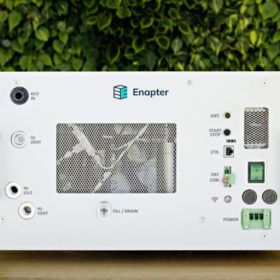
Plug & play electrolyzer for green hydrogen production from Germany
Developed by Germany-based hydrogen specialist Enapter, the EL 4.0 electrolyzer is based on a patented anion exchange membrane (AEM) technology. Commercial production is currently being prepared at the company’s Italian plant and the first shipments should be made in the summer.
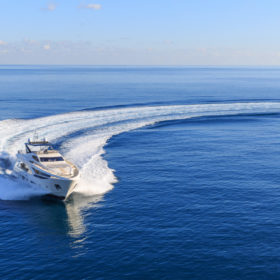
Hydrogen-powered boat to sail in Australian waters within 18 months
Australia’s Poseidon Marine H2 says it expects to have a hydrogen-powered boat in Australian waters within the next 18 months, after bringing on board the principal engineers from Dynamic Efficiency.
