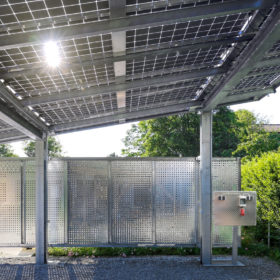
Biofuels vs. solar electricity for urban mobility
Solar electricity will have to compete with biofuels in the urban mobility landscape. Biofuels, however, have a very low energy productivity per hectare, as well as high requirements for fertilizers, pesticides, and water.
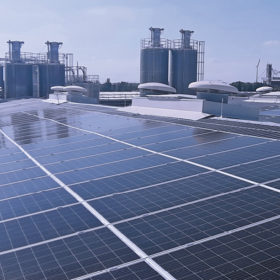
Italy deployed 1 GW of new solar in Q1
Italy reached 26.1 GW of cumulative installed PV capacity at the end of March, according to Italia Solare, the nation’s solar energy association.
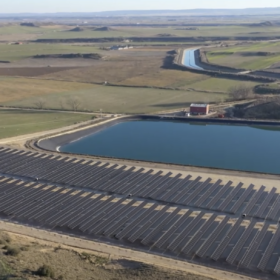
Acciona finishes PV-powered irrigation system without batteries
Acciona has completed a 1.5 MW solar plant that powers an irrigation system covering 3,400 hectares in northeastern Spain, serving 150 irrigators. The company will supply water to local farmers under a 26-year contract.
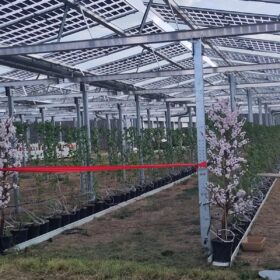
German agrivoltaics pilot features closed cycles for water, nutrients
The State Research Institute for Viticulture and Pomiculture (LVWO) in Baden-Württemberg, Germany, has started generating electricity and cultivating berries in a pilot plant. Separately, a project combining agrivoltaics with apple cultivation in Austria has also shown promising initial results.
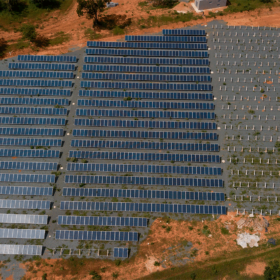
PV plants in Brazil hit by low performance in 2022
Centralized and distributed-generation PV plants in in Brazil generated less than expected last year, according to a study by Brazilian consultancy Greener.
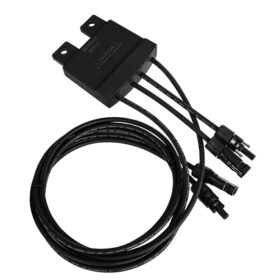
Beny introduces rapid shutdown tech for PV installations
Beny New Energy’s latest module-level rapid shutdown solution is UL certified and SunSpec certified. It says the new tech is designed for a range of PV systems, including residential, commercial, and large-scale arrays.

Denmark hits 3.2 GW of installed PV capacity
Denmark has reached 3.2 GW of cumulative installed PV capacity, with 236 MW added in the first quarter of 2023, according to the Danish Energy Agency.

Netherlands extends SDE++ program for renewables to overseas territories
The Dutch government says that the Netherlands Organisation for Applied Scientific Research (TNO) is currently mapping the three islands of Curaçao, Aruba, and Sint Maarten to identify suitable sites for wind and solar deployment.
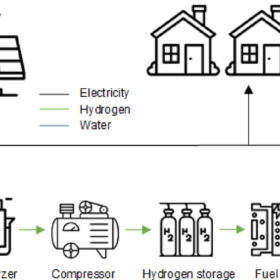
Novel approach to PV-battery-electrolyzer-fuel cell systems
TU Delft scientists have proposed a new methodology for off-grid PV-battery-electrolyzer-fuel cell systems in remote areas.
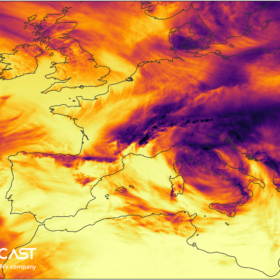
Storm Minerva hits solar power generation in Italy
In a new weekly update for pv magazine, Solcast, a DNV company, presents the solar irradiance data it collected for Italy in May. These data show that, during the Storm Minerva, solar PV production in Italy and the TransnetBW ISO region in southern Germany was significantly depressed from previous days. Conversely, wind power trended high, due to the intense and widespread nature of the system.
