
Curtailment is not the enemy
A new report by IEA-PVPS Task 16 looks at the use of “implicit storage” to transform intermittent renewable sources such as solar and wind into firm power generation. It shows that the total cost of the electricity system transformation could be lowered with the optimal use of capacity overbuilding and dynamic curtailment.
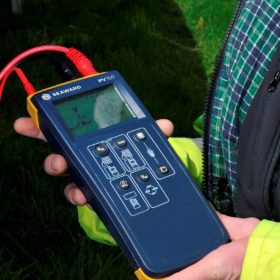
UK manufacturer releases new PV testing tool
Seaward’s new PV150 test instrument measures open circuit voltage, short circuit current, earth continuity, insulation resistance, and operating current. It weighs 0.95 kg and comes with a two-year warranty.
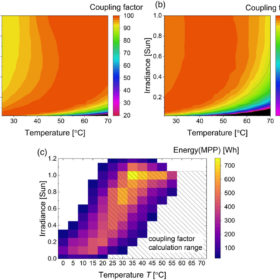
Replacing MPPT with direct PV-battery coupling
Researchers in Germany have assessed direct coupling and integration between PV and batteries at the scale of a single PV module. They say their solution could be cheaper and provide superior performance than maximum power point tracking (MPPT) in optimizing PV system performance.

Brazil hits 25 GW solar milestone
ABSolar, the Brazilian solar association, says that the PV sector has attracted BRL 125 billion ($24.2 billion) in new investments since 2012 and has generated more than 750,200 jobs.
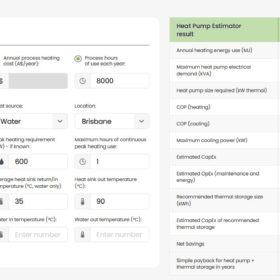
Online estimation tool for heat pump sizing
The Australian Alliance for Energy Productivity (A2EP) has released a free, online estimation tool to aid Australian businesses in sizing heat pumps to replace gas boilers. The tool estimates the capex, opex, net savings, and payback time based on inputs about heating, cooling, location, and temperature requirements.

Only5mins! – Europe’s hottest heat pump markets
pv magazine speaks to Jan Rosenow, principal and director of European programs for the Regulatory Assistance Project (RAP), about Europe’s top heat pump markets. He says Poland, Slovakia, Sweden, Germany and Finland posted the strongest growth in 2022.
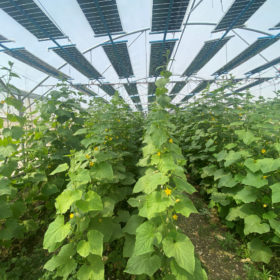
New agrivoltaic project to test crop-responsive PV trackers for greenhouses
An international consortium led by Israel’s Al-Zahrawi Society has launched the Regace project to develop agrivoltaic solutions for greenhouses. It will investigate the performance of a new tracking system across locations and climates and use carbon dioxide enrichment to improve crop yield.
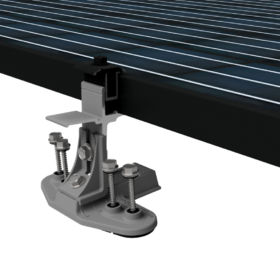
SnapNrack introduces solar mount that attaches to module before roof
SnapNrack’s TopSpeed solar mount begins installation on the ground, which limits time spent on rooftops.
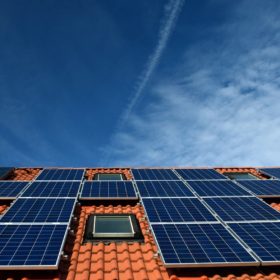
Dutch parliament approves proposal to phase out net metering
The House of Representatives of the Netherlands has voted to end net metering. If the Dutch Senate approves the proposal, it could usher in a new era for rooftop PV, with storage becoming crucial for the country’s energy transition.
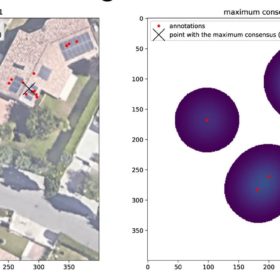
Aerial image dataset automatically maps rooftop solar arrays
French scientists have developed a dataset to enable the creation of installation registries, by extracting small-scale PV metadata from overhead imagery. It can be used to provide training data for remote PV mapping algorithms and test the robustness of machine-learning models.
