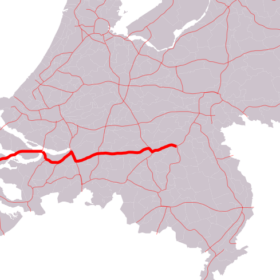
Planned 48 MW Netherlands solar plant could be another solar highway
It is not clear whether panels will line the Rijksweg 59 highway or be sited next to a stretch of it. UK oil giant Shell is planning the installation as part of a renewables cluster to also feature wind power.

Bushfire-affected South Australia homeowners to get free sonnen batteries
The state government has partnered with the German energy storage company to offer 188 families locally assembled sonnenBatteries as they rebuild their homes.
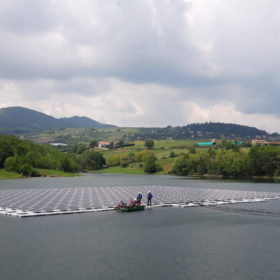
Another 30 MW of floating solar ready to set sail in France
The commune of Châteauneuf-du-Rhône, in the French department of Drôme, has signaled its approval of a floating PV project submitted by the Compagnie Nationale du Rhône which still requires a permit from the planning authorities.
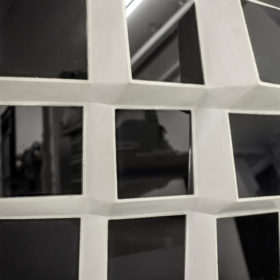
German scientists develop solar facade with 50% higher yield
The three-meter prototype consists of nine panels based on an aluminum compound. The PV elements of the facade can be tilted to capture more sunlight.
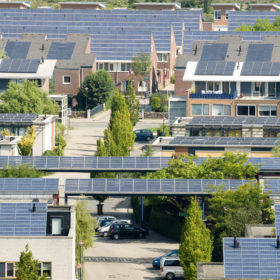
Energy community provisions for Italy
New measures introduced by the government allow households, businesses and public entities to produce and trade clean electricity in low-voltage grids. The new framework is open to power projects with a generation capacity no larger than 200 kW.

UK includes solar in new generation capacity auction
The announcement by the Department for Business, Energy and Industrial Strategy of an auction which will include solar next year appears to back prime minister Boris Johnson’s claims to be serious about the nation’s net-zero carbon ambition.
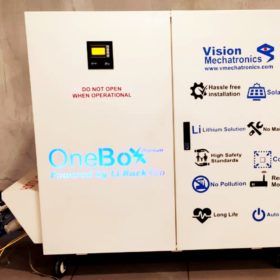
A plug-and-play solar-powered battery back-up solution for the home
The OneBox, from Indian manufacturer Vision Mechatronics, consists of a lithium battery, hybrid inverter and solar charge controller to give a ‘hassle-free’ solution for electricity back-up during power outages. Solar rooftop owners are offered a grid feed feature to maximize net metering income from any excess power generated.

Hydrogen production coupled to solar and storage to debut in Spain
Spanish gas provider Enagás has signed an agreement with Ampere Energy for the joint development of several hydrogen production R&D projects with PV and storage. The first installation will be deployed at a gas plant in Cartagena, in the southern Spanish region of Murcia.
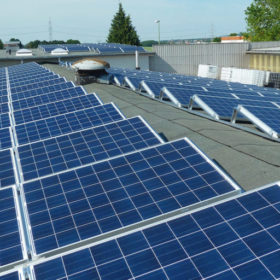
German grid agency reports 375 MW of new solar in January but revises down cumulative figure 360 MW
The cumulative capacity of subsidized PV systems in Germany reached 49,425 MW at the end of January. Under the nation’s triggered FIT reduction regime the tariff – and income from electricity sold directly to off-takers – will fall 1.4% this month.
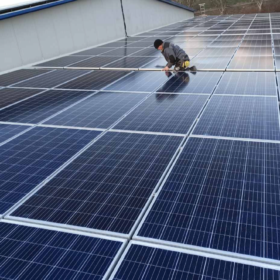
Moldova introduces feed-in tariff for small scale solar
The 15-year payments will come into force when new renewables FITs are published in the country’s official journal within the next few days. The government wants to allocate 15 MW of solar facilities ranging in size from 10 kW to 1 MW through the scheme, with larger projects having to compete in auctions.
