Cyprus installs largest rooftop PV under net billing program
The 2.5 MW array will operate under a payment system which guarantees grid operators will not be left out of pocket.
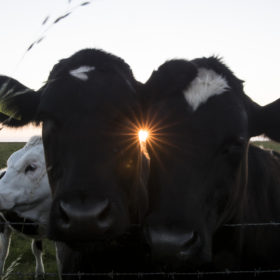
Ambitious 1 GW agrivoltaic livestock farming project announced in Malaysia
The Malaysia Automotive, Robotics and IoT Institute is planning a huge solar power project which will integrate agriculture and livestock farming in the Sabah region. The research institute claims to have already secured $50 million for the project’s first, 200 MW phase. The 25,000ha required for the projects will host up to 150,000 cattle as well as cultivation of forage crops such as kenaf, corn, wheat and hay.

Danish renewables auction too successful at driving down public cost of clean energy
The Danish Energy Agency allocated 252 MW of clean energy generation capacity, of which 83 MW was solar and 93 MW solar-wind hybrid facilities which included 34.1 MW of PV capacity. The average price premium to be paid on top of wholesale electricity rates to the successful bidders has fallen 30% in a year, prompting the authorities to muse they may be allocating too much public money to support such projects.

Elon Musk calls for an ‘immediate’ and ‘significant increase’ in Tesla’s solar installs
Tesla was once the unquestioned leader in the U.S. residential rooftop market with a market share of around 33 percent, but today, the company is No. 3, and its market share during the first quarter was a little more than 6 percent.
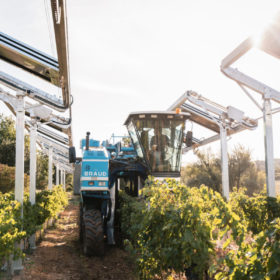
France’s Ombrea develops solar blinds with sliding PV panels
The company said its technology, which is managed by an AI-based system, can be used in agrivoltaic projects.
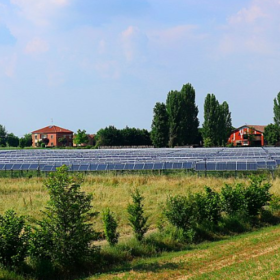
A2A to acquire 1 GW solar pipeline from China’s Talesun
The Italian utility has agreed to buy the PV development pipeline for an undisclosed sum via a subsidiary, and vowed to start building its first large-scale, subsidy-free PV plant in the early months of 2020.
Vietnam introduces auction scheme for large-scale PV
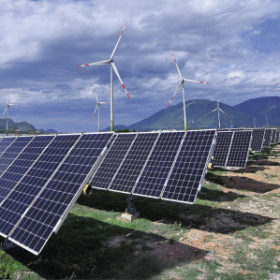
With the publication of Notification No. 402/TB-VPCP on Nov. 22, the Vietnamese government has cemented its transition from feed-in tariffs to auctions, in a clear step away from earlier promises to revive the FIT scheme.

South Sudan to get 20 MW/35 MWh solar-plus-storage plant
Egyptian manufacturer El Sewedy Electric has secured a contract from the authorities in Juba to build the $45 million project in Nesitu county. The African Export-Import Bank is financing the facility.
Coupling pumped hydro with renewables and other storage technologies
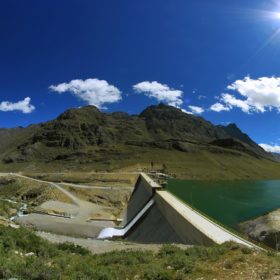
The combination of pumped hydro with other storage technologies can increase renewables penetration, improve operational safety and reduce maintenance costs at large-scale hydropower plants, according to new research. The study also focuses on techniques to determine the optimal size of renewables-based pumped hydro storage systems. Costs for hybrid solar-pumped hydro projects currently range from $0.098/kWh to $1.36/kWh.
17MW/15MWh storage system for solar plant at gold mine in Mali
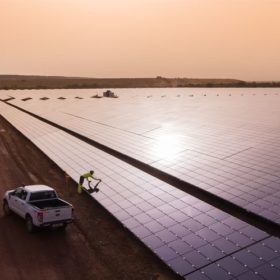
Mali is set to host one of the world’s largest off grid solar+storage projects, as a 30 MW solar plant will soon be coupled with a 17MW/15MWh storage facility to power the Fekola gold mine. Finland’s Wärtsilä will supply the battery.
