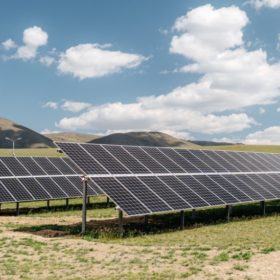
Novel way to calculate levelized cost of hydrogen generated by offgrid PV
French energy giant Engie has developed a transfer function method based on a model used to assess PV plant variability. Its researchers claim that the new approach does not overestimate the levelized cost of hydrogen of an alkaline electrolyzer powered by offgrid solar.

Bangladesh aiming for 2.3 GW of solar this decade
The nation announced a more ambitious climate change and renewables target at COP26 in Glasgow, and will be boosted by a $160 million funding pledge from the summit host nation.
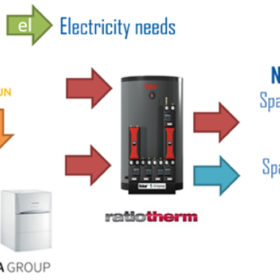
European consortium develops ways to couple heat pumps with solar panels
The Sun Horizon consortium has started to collect performance data on two pilot projects that combine heat pumps with solar systems using hybrid panels on homes in Riga, Latvia. The solution features a heat pump for space heating and domestic hot water and PVT panels to produce power for heating and domestic appliances, with excess power fed to the grid.
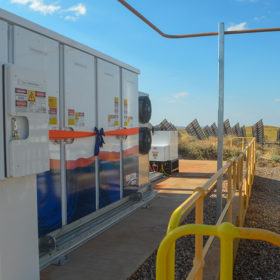
Australia’s hottest town now has a battery to store its excess solar
The town of Marble Bar in Western Australia’s remote East Pilbara region is famed for at one time recording 100 consecutive days of temperatures exceeding 37 C. So it’s no wonder the town’s residents have excess solar and nowhere to put it. That is, until now, thanks to the installation of a battery energy storage system beside the town’s centralized solar farm.
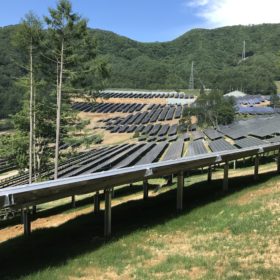
Land-constrained Japan sees utility scale solar reach 1,185m altitude
A 37 MW solar plant was built in Japan’s mountainous eastern Nagano prefecture. The project was developed by Singapore-based Vena Energy and constructed by Japanese contractor Airu.

Bahraini aluminum producer launches tender for solar park
Aluminium Bahrain B.S.C. is seeking developers for a 5 MW solar facility.
Irish developer secured half the projects in latest South African renewables tender
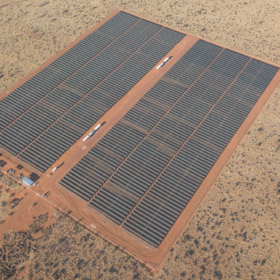
The weighted average cost of the electricity to be generated by the latest 975 MW fleet of solar projects procured by a national tender program has fallen more than 50% from the level recorded in the last such exercise, which was abandoned six years ago.
Indian government may offer extensions for PV projects due before April
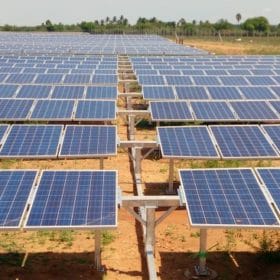
The Ministry of New and Renewable Energy has asked the dispute resolution committee to look into commissioning extension requests for solar projects that are due for delivery before April 1, 2022.
Imagine a nationwide energy system relying solely on distributed PV and V2G-equipped electric vehicles
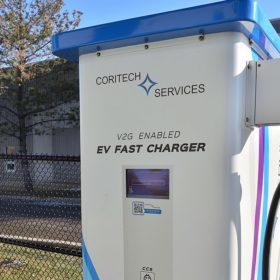
Norwegian researchers have sought to assess the theoretical technical feasibility of a country-level energy system based exclusively on distributed solar, electric vehicles, and vehicle-to-grid technologies. They applied the model to sunny Spain and found that 3.45 billion m2 of PV systems would be necessary to build a 100% self-reliant energy system.

Turkey deployed 992 MW of solar in first ten months of 2021
The country’s cumulative capacity reached 7.6 GW at the end of October.
