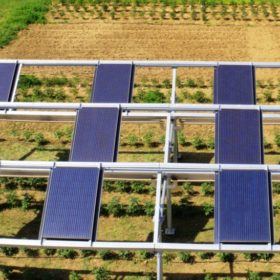
French alliance to build intelligent shade systems for agrivoltaics
French companies Ombrea and RES are partnering on the development of special PV shade systems for agrivoltaic projects. The devices will be equipped with artificial intelligence technologies to make them react to unfavorable weather conditions.

Switzerland allocates another $513m for solar incentives
The new funds will eliminate the waiting list for old feed-in tariff contracts. Around 22,400 new renewable energy systems have secured public support in Switzerland this year.
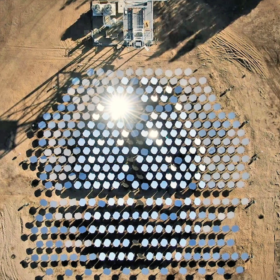
CSP startup Heliogen scores $39 million for CO2 project
Heliogen, which was founded by serial entrepreneur Bill Gross, aims to revitalize concentrated solar power with sCO2 tech to cut costs, water use, and plant footprints in industrial applications not suited to solar PV.

FRV buys 115 MW solar project in Australia
Spanish developer Fotowatio Renewable Ventures (FRV) has reaffirmed its presence in the Australian renewable energy marketplace by adding the 115 MW Metz Solar Farm to its solar portfolio.
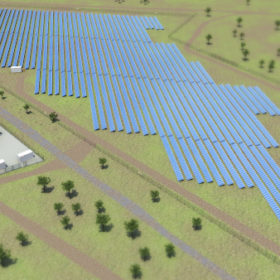
Solar micro-grid with 1 MW/4 MWh of vanadium redox flow storage in South Africa
Spanish renewable energy company Abengoa will deploy a 3.5 MW solar micro-grid at a vanadium mining site operated by Bushveld Minerals in South Africa. The storage system will be provided by Austria-based storage specialist Enerox Holdings Limited.
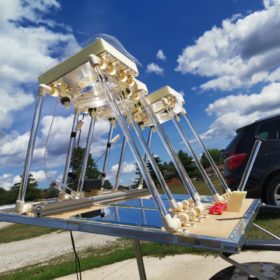
Radiative cooling for CPV systems
Scientists in the United States have tested soda-lime glass radiative coolers in a CPV system and claim these can reduce the device operating temperature by 5 to 36 degrees Celsius. This may result in an increase in the solar cell’s open-circuit voltage of between 8% and 27%.

Japan’s sixth solar auction concludes with lowest bid of $0.095/kWh
Around 368.8 MW of PV projects were allocated in the sixth round of Japan’s procurement program for large-scale solar. The lowest price offered was ¥10.00/kWh ($0.095) and the highest ¥12.00, for an average price of ¥11.49.
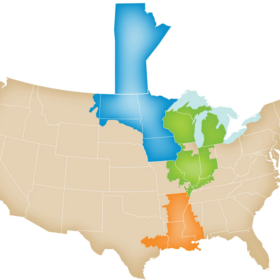
US system operator has 57 GW of solar in queue
The Midcontinent Independent System Operator’s renewables mix is set for a shift from wind to solar, if it can confront the challenge of transmission costs.

Australian miner unveils big solar ambitions
Fortescue Metals has revealed ambitious plans to build one of the biggest renewable energy portfolios in the world, with more than 235 GW of capacity, or five times the current capacity of Australia’s National Energy Market.
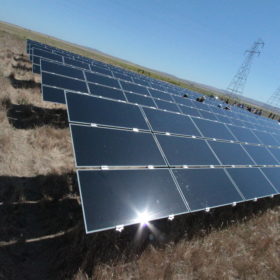
New approach for convective solar module cooling
A US research team claims to have demonstrated that packing PV modules in close proximity can exponentially increase convective heat transfer of a solar park. The scientists analyzed three different module arrangements and compared them to the common row-organized panel configuration.
