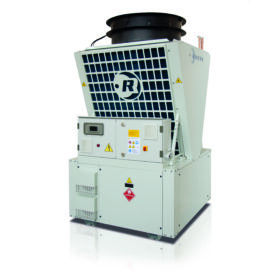
New propane heat pump for space, water heating
Italy-based Rhoss has developed a cascaded air-source heat pump that uses propane (R290) as the refrigerant. It can produce between 47.4 kW and 190.5 kW of heat and domestic hot water to a temperature of up to 75 C.
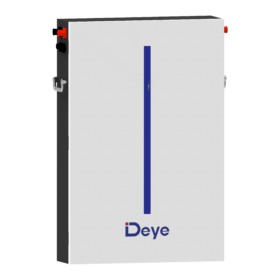
Deye unveils lithium iron phosphate battery for rooftop applications
China’s Deye has developed a new lithium iron phosphate battery system with a nominal voltage of 51.2 V. It says that up to 32 modules with a capacity of 6.14 kWh can be stacked and connected in parallel for a total capacity of 196.48 kWh.

Greece deployed 1.36 GW of new solar in 2022
Data released by the Hellenic Association of Photovoltaic Companies show that the Greek solar market installed three times more capacity in 2022 compared to 2021.
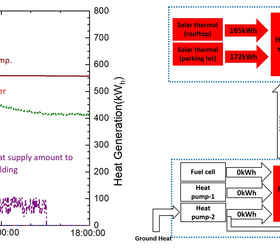
Renewables-powered heat pump for district heating
South Korean researchers have developed a heat trading system including a ground-source heat pump, solar thermal collectors, a fuel-cell system, and two heat storage tanks for district heating at hours of peak solar production.
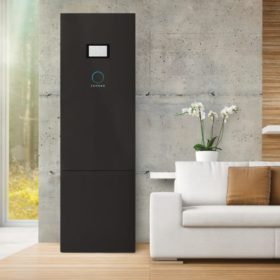
Italy deployed 1,121 MW/2,032 MWh of distributed storage capacity in 2022
Italy hit 959 MW/1,826 MWh of distributed storage capacity at the end of 2022. The segment continues to grow in the country, led by the regions of Lombardy and Veneto.
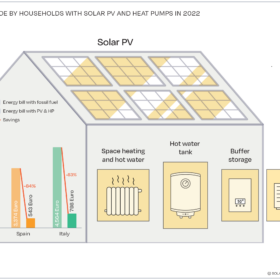
Study shows symbiotic effect of heat pumps and residential solar
SolarPower Europe says in a new report that households in Germany, Spain, and Italy can more than triple their savings by pairing PV with heat pumps. It said this combination helped families to save between 62% and 84% on their annual energy bills in 2022.
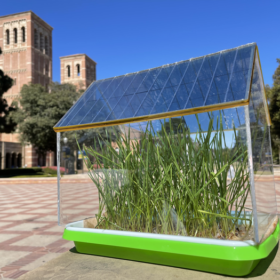
Semi-transparent organic photovoltaics for greenhouse applications
Scientists from the University of California, Los Angeles (UCLA), have used an antioxidant known as L-glutathione as an interlayer in an organic PV cell to prevent other materials from oxidizing. The cell has an efficiency of 13.5% and an average visible transmittance of 21.5%. The researchers said it is suitable for applications in solar greenhouses.
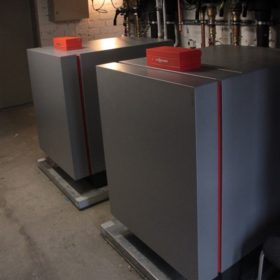
Fraunhofer ISE, Viessmann develop multi-source residential heat pump
Fraunhofer ISE has presented the results of retrofit heat pump installations in multi-family homes in Germany. One demonstrator featured rooftop solar PV and a multi-source heat pump developed in partnership with Viessmann. It uses air and geothermal as heat sources.
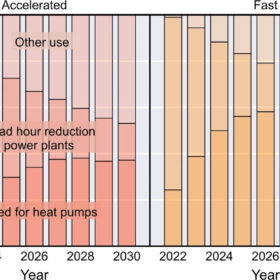
Heat pumps vs. renewables – a dilemma for Germany’s way out of gas
Researchers have looked at whether Germany can substitute more gas with renewables-powered heat pumps or renewable electricity to reduce load hours at gas-fired power plants. They argue that heat pumps are the fastest way to cut German gas consumption.
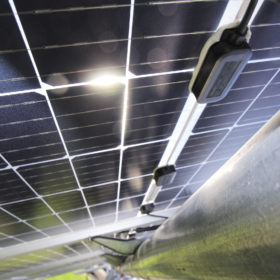
Dutch researchers propose modified IEC 61853 standard for bifacial solar
Scientists in the Netherlands have proposed the extension of the IEC 61853 standard to bifacial solar modules, with some key corrections. In particular, they recommend changing the third and fourth parts of the standard.
