
Netherlands may add 3.3 GW of new solar this year
According to state-run agency RVO, solar may reach 17.6 GW of installed capacity by year-end, thus becoming able to cover more than 12% of the country’s electricity demand.
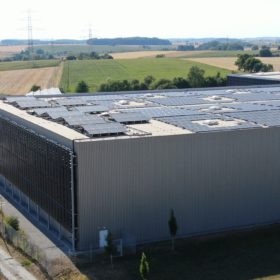
Polypropylene absorber to simplify brine heat pumps’ adoption
German company Mefa Befestigungs- und Montagetechnik has developed absorbers made of polypropylene that are intended to simplify the use of brine heat pumps. The novel technology should make it possible to combine multiple heat sources, including water, earth, air and also ice storage all within a single system.

Large scale PV projects proliferate in Portugal
Analysis from Aurora Energy Research shows around 4.3 GW of solar projects secured grid-connection permits to date in Portugal. Data also shows a record 1.2 GW of solar projects requested generation licenses in the first seven months of the year, smashing previous records.
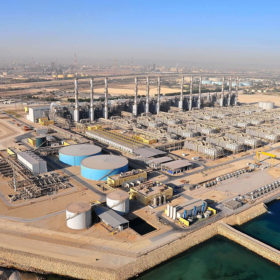
Alfanar to build 110 MW of solar for desalination plant in Saudi Arabia
Alfanar has revealed plans to set up a solar project including ground-mounted and floating PV to provide power to the Al Jubail 2 water desalination plant on the east coast of Saudi Arabia. It will require an investment of SAR 1.2 billion ($319 million).
Poland to allocate 9 GW of solar in 2022-27 auctions
The Polish government plans to allocate around 13 GW of new renewables capacity under a six-year scheme. It said 4.5 GW of solar will be assigned to projects above 1 MW in size, while another 4.5 GW of capacity will be assigned to smaller installations.
Poland installed 3.3 GW of solar in January-August period
Poland hit 11 GW of installed PV capacity at the end of August. The distributed-generation PV segment continues to drive the growth of the Polish solar market, despite recent changes in legislation.
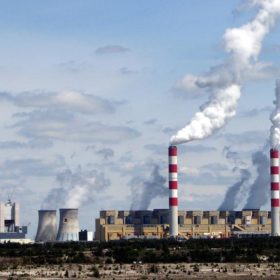
BNEF outlines scenarios to replace Europe’s largest coal plant with 10.7 GW of solar, wind
BloombergNEF (BNEF) has outlined a potential transition plan for a coal-fired power plant in Belchatow, Poland. It said that 5 GW of solar and 5.7 GW of wind could replace 80% of Belchatow’s lignite generation capacity by 2036, in an optimal scenario.
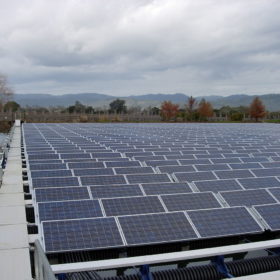
Indian hydropower producer wins 105 MW of floating PV with $0.047/kWh bid
State-owned SJVN has won a solar tender held by Maharashtra State Power Generation Co.
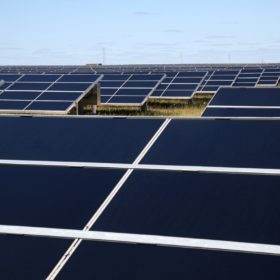
Australia’s first utility-scale solar farm marks 10th anniversary
Australia’s first utility-scale solar PV project is marking its 10th anniversary this month. The milestone highlights the pace and scale of the country’s transition to a renewables-led future.
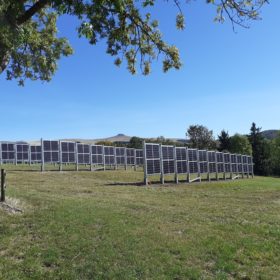
Impact of vertical PV on grasslands
A French consortium has commissioned an 89 kWp pilot project featuring 252 vertically installed solar panels. The companies are now trying to assess the impact of vertical bifacial solar panels on grasslands.
