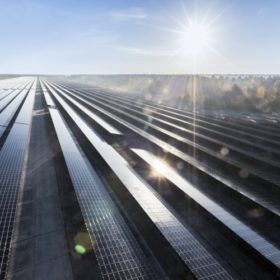
Innogy builds unsubsidized 50 MW solar park in Spain
The German company acquired the rights to build the plant from Synergia Energy Solutions. The Alarcos solar park will be in the municipalities of Ciudad Real and Poblete. Work is expected to begin in April, with grid-connection this year.
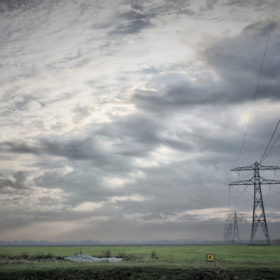
Solar must deal with grid constraints in northeastern Netherlands
Despite recent efforts to improve the power network, in order to host more generation capacity from large-scale solar and renewables, Dutch transmission system operators TenneT and Enexis have said that there is very limited capacity for more solar in the provinces of Groningen, Drenthe and Overijssel.
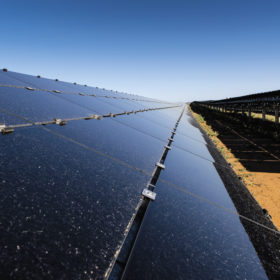
Solar will rebound this year with more than 100 GW of new capacity
Wood Mackenzie’s number-crunchers are the latest analysts queueing up to predict a bumper year ahead for PV, with falling prices, rising efficiency rates and booming markets outside China all on the cards. And it could be a make-or-break year for mega-projects, says Wood Mac.

Oman to install hybrid PV-diesel plants totaling 160 MW across 11 sites
The hybrid plants will be developed as independent power producer (IPP) projects at 11 off-grid sites. The largest project will be developed on the island of Mazeira, off the east coast of mainland Oman in the Arabian Sea.

Solar installations see an unprecedented boom in Estonia
The Baltic nation installed 90 MW of PV last year, four times more than it had done since it began adopting solar. The growth was down to a new regulation issued by the government in June and the big push came mainly from small installations.

State-owned lenders will stump up cash to bail out developer Panda Green
With a $3bn debt pile, gearing of 73.1% and $127m due for repayment in around three months’ time, the directors of the former United PV Group want shareholders to dilute their investment by issuing shares worth more than 40% of an enlarged company, with a chunk of the proceeds coming from public funds.
First private PPA for utility-scale solar in Egypt is signed
The 25-year agreement relates to a 6 MW solar plant that will meet up to 4% of the electricity demand of a facility owned by the Arabian Cement Company, in Egypt’s Suez governorate. The project is being financed by local bank QNB AlAhli under the EBRD’s Green Economy Program.
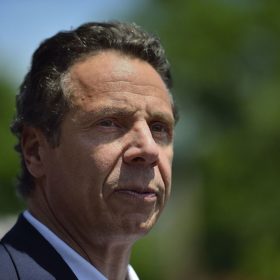
New York governor’s Green New Deal starts with 1 GW of large-scale solar
The state has also awarded 614 MW of wind, and three of the 20 renewable energy projects commissioned are paired with energy storage. NextEra, Invenergy and EDF are each set to build solar projects larger than 100 MW.
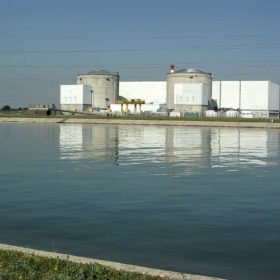
EU approves France’s plan to replace nuclear plant with 300 MW of PV
The European Commission said the subsidy scheme to be adopted for the project is in line with the EU state aid rules. The 40-year old Fessenheim nuclear plant has faced several safety issues over the decades.

The weekend read: Why are we not making the most out of big data analysis?
Although the solar industry sees itself as young, its assets are aging. Owners still struggle with the complexity of making the best use of big data analysis to improve plant efficiency and profitability. Ragna Schmidt-Haupt, of Everoze, examines why this has not changed, and what can or should be improved. Artificial intelligence, advanced data analytics, automated assessments and smart monitoring software – holistic solar asset management starts here.
