
More details emerge of China’s $447m solar subsidy for 2019
The NEA has offered a broad hint that RMB3 billion will be made available in incentives this year – including RMB750 million for residential PV. Roth Capital Partners says achieving 40 GW of new capacity will hinge on timely action by the National Energy Administration.
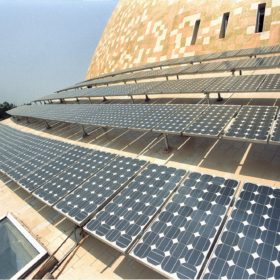
India’s solar sector will outperform globally despite near-term challenges, says Fitch Solutions
With Narendra Modi being tipped to triumph again in the current Indian elections, Indian solar capacity is expected to grow robustly, at 15.3% per year, on the back of continued strong government support.

Getting (almost) all our energy from the sun by 2050
Solar could meet approximately 68% of global energy demand with other renewables making up the rest, according to a new report. A 100% renewable energy system could also create 22 million solar jobs by 2050, the study claims. Keeping global warming below 1.5 degrees C, though, would require FITs for projects up to 40 MW in capacity, auctions for bigger systems, removing fossil fuel and nuclear subsidies and providing more education and R&D and less red tape.
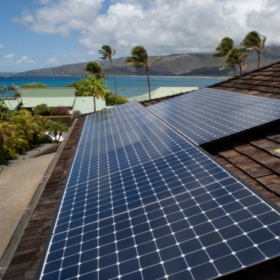
Hawaii utilities seek more renewables, storage and now grid services too
Hawaiian Electric Companies has laid out plans to source the equivalent of 135 MW of solar and 1,378 MWh of energy storage – as well as load shifting and frequency response from distributed energy resources through aggregators.

Developer Avaada raises $145m to fund 2.4 GW of Asian and African solar
Indian developer Avaada Energy has raised the funds from the Asian Development Bank and European development institutions. The PV business will finance 2.4 GW of the 5 GW of solar capacity it hopes to secure over the next two years.

Venezuela plans its first utility scale PV projects
Although details are vague, the Vice Ministry of Alternative Energies is reportedly developing the country’s first medium sized projects to be connected to the national grid. It is also planning to implement distributed generation projects ranging in size from 1.5 MW to 3 MW in the crisis-torn nation.
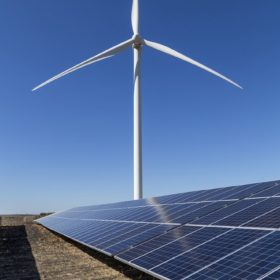
EDP to build Portugal’s first MW-sized PV plant coupled with storage
The 3.8 MW project is conceived for self-consumption of two facilities of the lead-acid battery manufacturer Exide in Castanheira do Ribatejo and Azambuja.
China offers insight into transition to subsidy-free solar
The emphasis on grid-parity PV has been highlighted in a consultation document that has emerged after several weeks of haggling in Beijing. Chinese analyst AECEA says the success of any subsidy-free effort would hinge on the ability of power companies to transmit and guarantee consumption of power generated by new projects.
Solar investment mostly up on venture capital and debt as money pours into large scale projects
Mercom Capital Group’s Q1 2019 Solar Funding & M&A report has registered $2.8 billion in venture capital, public market and debt financing, up from $2.5 billion a year ago. Large scale project financing reached a record $5.58 billion across 43 deals and there were 18 solar corporate M&A transactions.
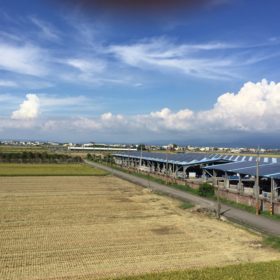
Taiwan becomes a GW solar market
TrendForce says the country deployed more than 1 GW of new PV for the first time last year, and predicts this year may see as much as 1.5 GW of new solar capacity. The nation’s cumulative capacity reached 2,618 MW at the end of last year, according to the International Renewable Energy Agency.
