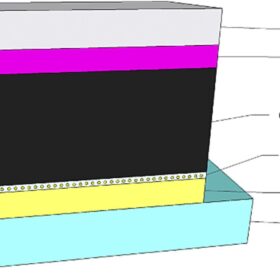
Improving perovskite solar cell performance with silver nanoparticles
Scientists in the United Kingdom have proposed for the first time to deposit silver nanoparticles in electron transport layers used in perovskite solar cells to improve device performance. They found that an “optimal” concentration of silver nanoparticles may help to improve a perovskite cell’s charge transfer and extraction, as well as its efficiency.
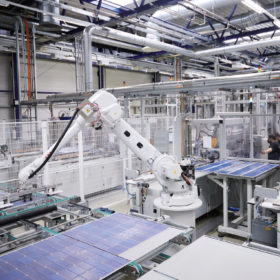
Meyer Burger to cease PV module production in Germany
Meyer Burger, a Switzerland-based heterojunction cell and panel manufacturer, says it will stop making PV modules in Germany, but it will continue to produce solar cells in the country to support its panel production operations in the United States.
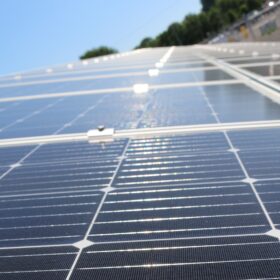
TOPCon solar module production costs now at $0.16/W in China, says ETIP PV
New figures from the European Technology and Innovation Platform for Photovoltaics (ETIP PV) show that China can now produce tunnel oxide passivated contact (TOPCon) PV modules for between $0.160/W and $0.189/W. Costs in Europe, India and the United States, by contrast, could be as low as $0.243/W, $0.281/W, and $0.195/W, respectively. ETIP PV made the comparison based on production at a 10 GW integrated PV factory.

Red Sea tensions set to drive up solar module prices
The costs of transporting a container from China to Rotterdam have already almost tripled due to ongoing tensions in the Red Sea and the Gulf of Aden. Houthi militants have been attacking merchant ships there for weeks, preventing them from entering the Red Sea and transiting through the Suez Canal.
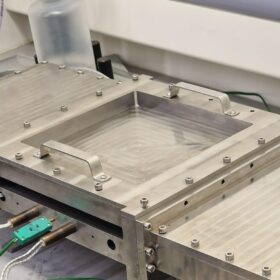
Aerosol process to boost perovskite solar cell performance
Aerosolar, a spinoff from the Queen Mary University of London, has created a novel aerosol method that it claims boosts efficiency and stability of metal halide perovskite solar cells.
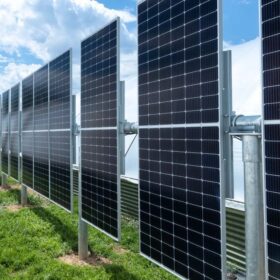
Solar fences stand out in Australian market simulation
Solar fences are starting to gain traction in European and North American markets, with figures from energy software specialist Gridcog suggesting that vertical bifacial solar could also be technically and economically viable in Australia.
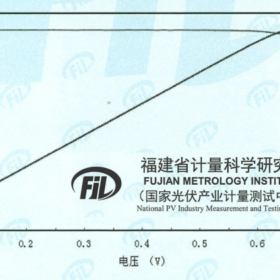
Das Solar claims record open-circuit voltage of 742 mV for n-type solar cell
Das Solar has achieved a world-record open-circuit voltage of 742 mV for an M10 n-type tunnel oxide passivated contact (TOPCon) solar cell, with a power conversion efficiency of 26.33%, according to China’s National PV Industry Measurement and Testing Center (NPVM).
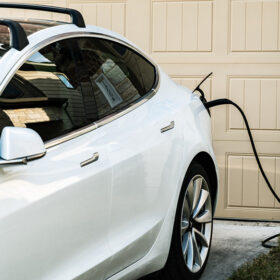
EV owners more likely to install rooftop solar
Scientists at the US National Renewable Energy Laboratory (NREL) have analyzed a survey of 869 households in the San Francisco Bay area and have found that electric vehicle (EV) owners are more likely to install rooftop solar on their homes than other consumers.
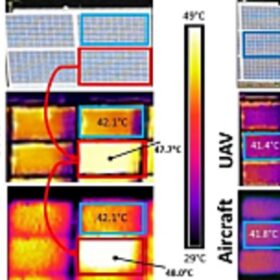
Drones vs. aircrafts for PV plant inspection
Scientists in Italy have investigated the performance of drones and a human-crewed airplanes for carrying out aerial infrared thermography inspections on PV power plants. According to their findings, airplanes may be more cost-effective.
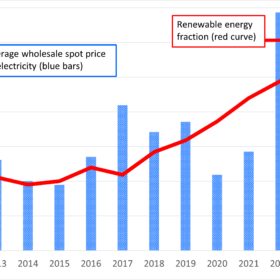
PV and prices – the fast uptake of solar in Australia
Australia currently has about 40% renewable electricity, mostly solar and wind. This is not causing wholesale spot prices to change, nor destabilizing the grid. On current policy settings, the country will reach 82% renewable electricity in 2030.
