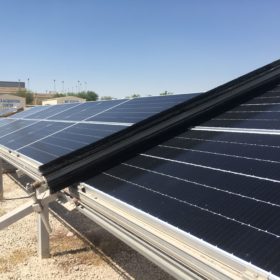
Assessing vibrations in solar modules due to robot cleaning
Qatari researchers have looked at the degree to which cleaning robots could threaten the physical integrity of solar panels. They found that cleaning machines have a very minimal impact and that modules of similar sizes tend to exhibit roughly the same amount of vibration.
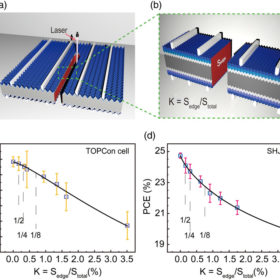
Spray passivation to reduce losses in TOPCon, HJT cell-to-module process
Chinese researchers have developed a new passivation technique for shingled solar panels based on tunnel oxide passivated contacts (TOPCon) or heterojunction (HJT) tech. It reduces recombination losses in the cell-to-module process and reportedly increases open-circuit voltage, fill factor, and efficiency.

Hanwha Q Cells unveils updated modules for Australian rooftop market
Hanwha Q Cells has launched the latest generation of its Q.MAXX solar panel series for the Australian residential market. It says the power class has been increased by up to 15 Wp from previous iterations.
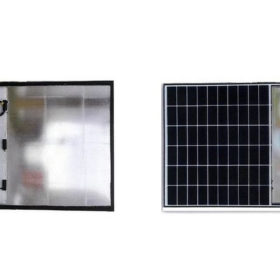
Water jet tech to recover glass from end-of-life solar panels
Japan’s Shintora Kosan has developed a novel water jet technology to recover glass from end-of-life PV modules. It says it can pulverize the solar cells and the backsheets without damaging the glass.

JA Solar to build new vertically integrated solar factory in China
JA Solar says it will build a new manufacturing facility in Inner Mongolia, China. The plant will produce everything from polysilicon to solar panels.

New model to predict safety of floating solar arrays
South Korean scientists have developed a way to determine when a floating PV system is safe to install in the field.
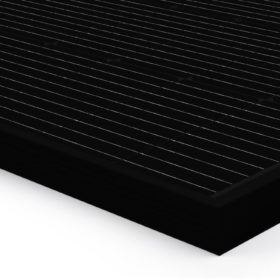
Bisol unveils 21.5%-efficient M10 full-black solar panels for residential use
Bisol’s new products feature a temperature coefficient of -0.34% per degree Celsius and a power rating of 400 W to 420 W. The Slovenian PV module manufacturer said it used M10 wafers for the first time.
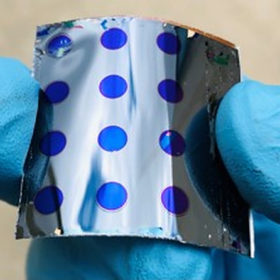
Flexible cadmium telluride solar cell with 12.6% efficiency via lift-off method
A US research team has developed a cadmium telluride (CdTe) solar cell through a lift-off method that reportedly ensures higher crystallinity of the cadmium sulfide film. The device has a power conversion efficiency of 12.60%, an open-circuit voltage of 0.829 V, a short-circuit current density of 23.64 mA/cm2, and a fill factor of 64.30%.
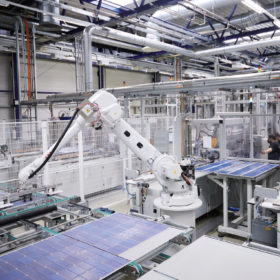
Wood Mackenzie sees $114 billion in US renewables investments by 2031
The advanced manufacturing production (AMPC) credit and domestic content requirement (DCR) will be key to supporting the rapid development of the US renewable energy economy, says Wood Mackenzie.

Only5mins! – Thin-film solar researcher discusses future of CIGS
The future outlook for copper indium gallium selenide (CIGS) solar cells is bright, due to recent R&D achievements and efficiency gains, according to Ayodhya Tiwari, head of laboratory at Switzerland’s Federal Laboratories for Materials Science and Technology (EMPA). CIGS has already shown its value in building-integrated PV applications, but as production volumes increase in the years ahead, ground-mount plants and big utility-scale installations could also become feasible, says Tiwari.
