
Low-light dye sensitized solar cells for connected devices
Ambient Photonics has developed solar cells that can be used by internet-of-things (IoT) and smart home device companies. It is working to secure funds from the U.S. government to build a factory in the United States.
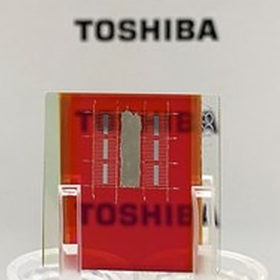
Toshiba claims 8.4% efficiency for transparent cuprous oxide solar cell
The record efficiency was achieved by engineering the cell with reduced copper(II) oxide (CuO) and copper (Cu) impurities in the thin-film deposition. It showed an open-circuit voltage of 1.13 V, a short-circuit current of 10.63 mA/cm2, and a fill factor of 0.696.

Australia prepares for first solar ‘upcycling’ facility while recycling operations expand
As Australia stares down a deluge of worn out solar panels, recycling – and indeed upcycling – programs are grinding into gear. In Victoria, a site has been found for Australia’s first facility to recover and reuse solar module materials, while Reclaim PV has extended its manufacturer partner and pickup location lists.

Chinese PV Industry Brief: Daqo announces $5.2bn investment to expand capacity
The polysilicon maker has announced it wants to build another factory in in Baotou City, Inner Mongolia. Elsewhere, the National Energy Administration has said new PV installations for the first 11 months of the year totaled 34.83 GW.
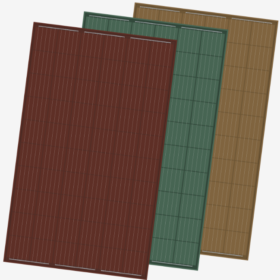
Colored BIPV panel with 350 W output from Italy
Italian manufacturer Solarday has launched a glass-glass building-integrated monocrystalline PERC panel available in red, green, gold and grey color. Its power conversion efficiency is 17.98% and its temperature coefficient is -0.39% per degree Celsius.
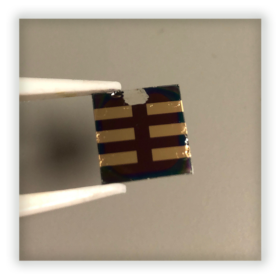
Paired with ‘wonder material,’ over 21% efficiency demonstrated in perovskite solar cells
The use of phosphorene nanoribbons boosted the cell, putting it on par with traditional silicon cell output levels.
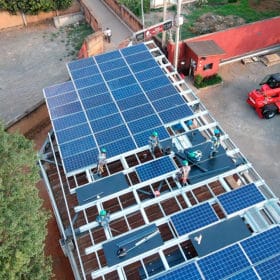
‘Africa’s leaders need to walk the walk on solar’
Attendees at an online event dedicated to rooftop solar in Central Africa called for customer incentives, tax exemptions for solar kit, feed-in tariffs, installation standards, affordable finance, grid connections and recycling policies across the region.
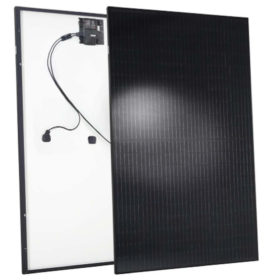
Hanwha Q Cells, Enphase launch 20.6%-efficient AC module in Europe
The AC module incorporates Enphase IQ 7+ microinverters and has now a higher wattage of 385 W.

Norwegian investor raises stake in company developing ‘perovskite-boosted’ solar cells
Swedish business Evolar is working on a bolt-on piece of production equipment which would upgrade the cell lines of conventional manufacturers with a perovskite lift in performance.
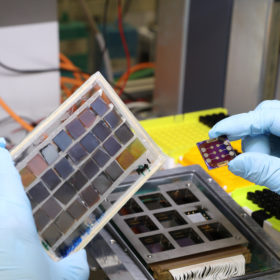
Perovskite solar cell retains 99% of initial efficiency after 1,450 hours
Developed by German researchers, the 20.9%-efficient device was built with an architecture avoiding the use of the ionic dopants or metal oxide nanoparticles that are commonly used to contact the cell, as these can be subject to secondary reactions at higher temperatures.
