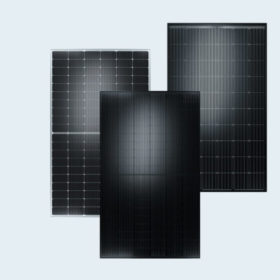
Solarwatt is the first solar module manufacturer enabling carbon compensation
The company’s German customers can buy, together with the modules, CO2 certificates so that the products are completely neutral. According to the manufacturer, the additional costs are about €11 per module.

Chinese PV Industry Brief: Xinte wants to add another 200,000 tons of polysilicon capacity
Xinte’s new manufacturing facility is planned to be located in Changji county, in the Xinjiang Uygur autonomous region. Moreover, Longi is planning to build another factory in Erdos City, Inner Mongolia.
Canadian Solar launches 420W rooftop solar module with 21.5% efficiency
The new product is part of the company’s HiKu6 series based on 182mm wafers. Its temperature coefficient is 0.34% and its electrical characteristics are claimed to be compatible with the most common photovoltaic inverters thanks to current values below 14A.
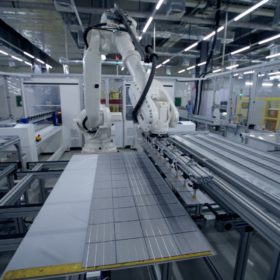
India’s PV module production capacity could hit 36GW by 2023
India’s solar cell and module production capacity is expected to rise in the years ahead.
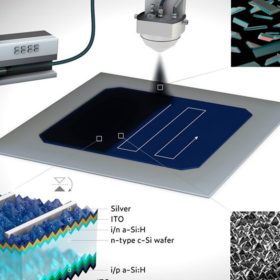
KAUST researchers achieve 20.1% efficiency in heterojunction solar cell based on 2D MXenes electrodes
The solar cell is based on the titanium carbide MXene and is claimed to have retained around 99% of its initial efficiency for more than 600 days of ambient air storage. The device was built using spray coating to directly deposit the titanium carbide flakes on the cell’s rear side.
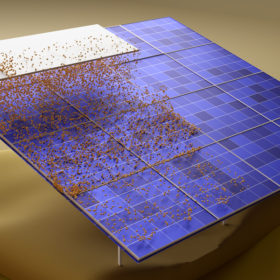
MIT scientists develop PV cleaning system based on electrostatic repulsion
Scientists from the Massachusetts Institute of Technology have developed a system that can be operated at a voltage of around 12V, with a 95% recovery rate for lost power after cleaning. The waterless system can be operated automatically via an electric motor.
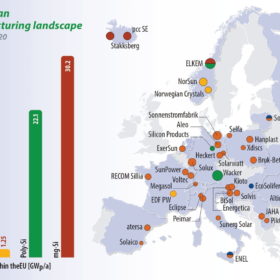
The weekend read: EU solar manufacturing – The time is now
European solar manufacturing is back on the agenda after over a decade of minimal activity. Ambitious proposals are in place to reactivate a booming industry with investment earmarked, factories planned, sustainability goals announced, and political strategies outlined to support the projected growth of PV installations. Can these plans be realized? The UP Initiative will spend the second quarter delving into this question.
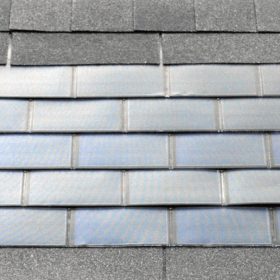
Chinese PV Industry Brief: 50 GW plan for rooftop, BIPV
Elsewhere, Wafer manufacturer Shangji Automation has secured a long-term wafer supply agreement from cell maker Aiko Solar and wafer maker Zhonghuan Semiconductor reported record revenue for 2021. Furthermore, GCL-Poly appears to have backtracked on its plan to rename the business GCL Technology

The Hydrogen Stream: Metal foam for low-cost green hydrogen generation
Researchers from Saudi Arabia’s King Abdullah University of Science and Technology have presented the results of a low-cost method of generating carbon-free hydrogen. In other news, Norwegian fuel cell producer Nel ASA said it was ready to increase its electrolyzer production capacity to meet the European Union’s raised ambitions for renewable hydrogen, while oil giant Petronas Eneos announced plans to set up a hydrogen production plant in Indonesia.
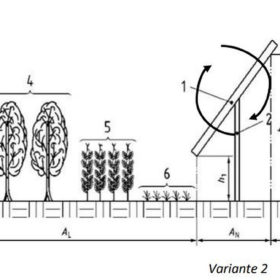
Italian solar sector defines standards for agrivoltaics
A document compiled by three Italian renewables associations identifies with extreme precision the area that is allowed to be used for power generation in the two most common agrivoltaics configurations — solar arrays with elevated solar modules and PV systems deployed between crop rows.
