
Covid adds to Indian solar manufacturer woes
A pandemic-related sales slump has dealt another blow to domestic panel makers already faced with rising input costs and an expected surge in imports due to the scheduled wind down of safeguarding duties on foreign products from late July.
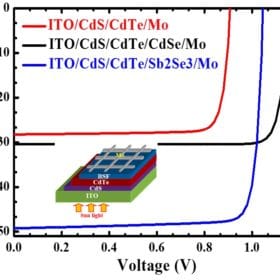
CdTe heterojunction solar cells based on antimony selenide back surface field layers
An international research group is seeking to increase the efficiency of heterojunction cadmium-telluride solar cells by applying back surface field (BSF) layers made of antimony selenide. It claims the addition of this compound may raise CdTe cell efficiency by around 9% and has the technical potential to reach efficiencies over 40%.

European Court: Renesola cells assembled into modules in India were correctly subject to EU anti dumping duty
The ruling was issued on Thursday after the matter was referred by a U.K. tax tribunal which, in March last year, upheld the U.S.-headquartered solar manufacturer’s claim the assembly of cells into panels is an important step, which should render such products Indian.
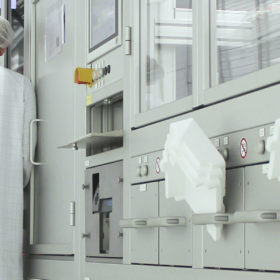
Valoe announces IBC solar cell order for specialist applications
Czech specialist module manufacturer Fill Factory has signed up to take €500,000 worth of Valoe’s inter-digitated back contact cells under a one-year supply contract.

ESMC criticises lack of solar manufacturing in Euro recovery plans
The trade body has highlighted a lack of explicit PV industry support in EU member states which already host domestic manufacturers, such as Germany, France, Austria, Belgium and Lithuania, and says the focus on green hydrogen could exacerbate the solar trade deficit with Asia.
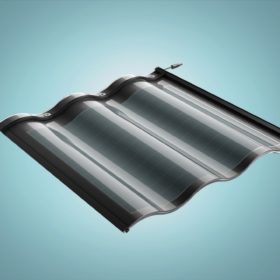
Canadian BIPV module supplier unveils two solar tiles
Both products are based on 22%-efficient CIGS solar cells and are manufactured in Asia. One of the two devices has a flat design and power output of 80 W and a second product features a nominal power of 30 W and an undulating design.

Using excess heat from PV modules for lithium-extraction process
Canada-based Enertopia filed provisional patents for technology that it said could boost PV system output by 10% or more and reduce panel heat stress.

Applications open for Indian solar manufacturing incentive scheme
Companies can apply for incentives to set up gigawatt-scale solar factories in India. Applications can be submitted until June 30 and the list of successful recipients will be announced on July 26, with letters of award to be issued four days later.
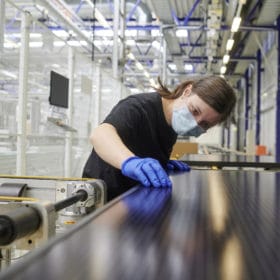
Meyer Burger begins manufacturing activities at 400 MW module factory in Germany
The Swiss manufacturer opened its module factory in Freiberg a few days after having begun manufacturing activities at its 400 MW cell factory in Thalheim.
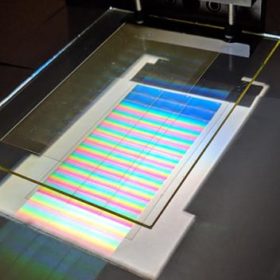
Holographic light collector to improve solar panel yield
In the proposed system, the optical element is placed symmetrically at the center of the solar panel in order to increase the length of the effective light collection region. Each hologram is claimed to be able to separate the colors of sunlight and direct them to the solar cells within the panel.
