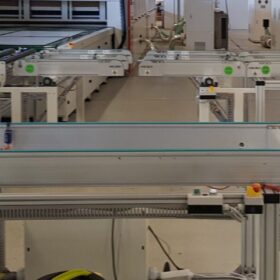
German solar module maker Soluxtec files for insolvency
Soluxtec has entered provisional insolvency proceedings as declining module prices and international competition continue to pressure European solar manufacturers. The company said it plans to restructure operations, maintain module deliveries, and preserve jobs while seeking investors.

Solar Manufacturing USA 2026 – production and technology at the heart of US solar
The upcoming Solar Manufacturing USA 2026 conference in Austin will focus on real U.S. solar manufacturing progress, shifting attention from capacity announcements to actual production, costs, yields, and technology choices across the full value chain. It will also examine how policy changes and tariffs are driving domestic expansion in ingots, wafers, cells, and modules, while highlighting competing technologies like back contact, heterojunction and TOPCon.
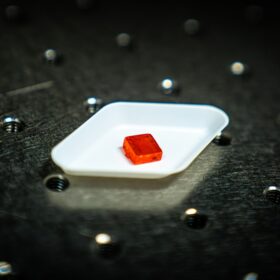
Scientists discover why lead-halide solar perovskites work efficiently despite being structurally ‘messy’
Researchers in Austria found that unusually high photovoltaic efficiency in lead-halide perovskites can be explained by internal electric fields generated at strain-induced domain walls, which separate charge carriers and enable long-range transport. Their experiments indicated that these effects arise from mesoscopic structural inhomogeneities rather than a uniform crystal structure, providing a general mechanism for charge separation in these materials.
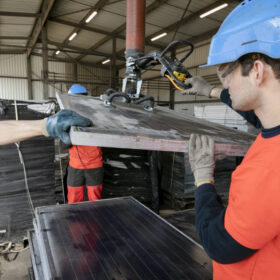
Rosi to build PV module recycling plant in Spain
Rosi has raised more than €20 million in a Series B funding round to scale its photovoltaic module recycling business and build a new 10,000-tonne-per-year facility in Teruel, Spain. The company uses pyrolysis-based technology to recover high-purity materials including silver, silicon, copper, aluminium and glass from end-of-life solar modules.

Boviet Solar sells U.S. PV module factory to Indian manufacturer Inox Solar
The divestment, already partially secured via escrow, reflects regulatory pressure from U.S. FEOC policy changes. Boviet Solar also continues negotiations to sell a separate U.S. cell project.
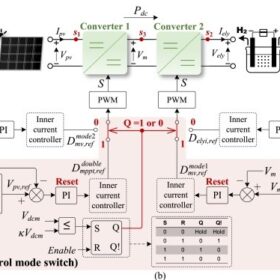
Low-power ride-through tech keeps green hydrogen flowing in standalone PV–electrolyzers
A UNSW-led research team proposed two low-power ride-through strategies for standalone PV–electrolyzer systems to maintain stability during sudden solar power fluctuations without using battery storage.

Indium oxide promises to increase CIS solar cell efficiency to unprecedented levels
Indian scientists developed a cadmium-free CIS thin-film solar cell using indium oxide as an electron transport layer, achieving a simulated efficiency of 29.79% with SCAPS-1D modeling. Through sensitivity analysis, they showed that low defect density, optimized absorber thickness, and effective thermal management are critical for minimizing recombination losses and enabling high-performance, scalable devices.

Cooling PV modules with hydrogel-coated paper
A Vietnamese research team has developed a low-cost passive cooling system for PV modules based on hydrogel-coated paper that combines water flow and interfacial evaporation to reduce operating temperatures. Outdoor tests showed temperature reductions of up to 14 C and efficiency gains of up to 16.8%, with stable operation achieved using both freshwater and natural seawater.

How to electrify greenhouses with semi-transparent PV, heat pumps
Researchers in Canada found that 69%-transparent crystalline silicon semitransparent PV modules can improve tomato greenhouse yields by up to 38% while maintaining healthy plant growth through beneficial partial shading. Their simulations also showed that combining rooftop agrivoltaics with heat pumps can fully eliminate fossil fuel heating.

Longi announces world record efficiency of 28.13% for silicon solar cell
Longi claims to have achieved the world’s highest efficiency for a silicon solar cell. The result was confirmed by Germany’s Institute for Solar Energy Research Hamelin (ISFH).
