
CNBM wants to set up GW-scale production of CdTe solar panels in China
German PV production equipment provider Singulus will supply the vacuum coating systems for the new production. The Chinese conglomerate currently operates CIGS panel production facilities at four different locations in China.
The best radiative cooling tech for PV arrays
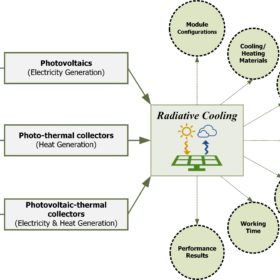
Scientists in China have analyzed the radiative cooling techniques used in combination with solar energy systems such as PV arrays, solar thermal collectors, and concentrated PV installations. They identified five major system typologies based on functionality and working time.
Semitransparent selenium solar cell for applications in tandem devices
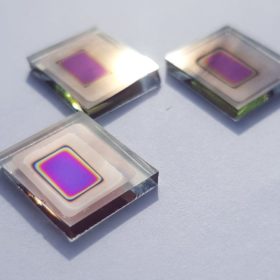
The bifacial device showed a power conversion efficiency of 5.2% on the front side through an n-type contact and 2.7% on the rear side through a p-type contact.
Webinar Q&A: A recipe for improved performance
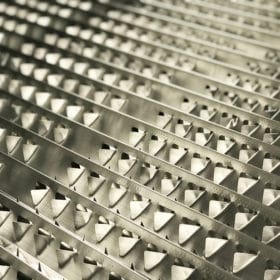
In a recent pv magazine webinar, module degradation experts took our audience through the role of temperature and mechanical stress in causing modules to under-perform. We were treated to a look at some impressive results for modules integrated with Coolback – a solution that replaces the backsheet/rear glass and frame in a conventional panel and promises lower operating temperatures and better mechanical strength. Here, Simon Meijer and Alex Masolin, from Coolback – along with Fraunhofer ISE’s Andreas Beinert – answer some of the questions we didn’t have time for during the live broadcast.

Industry reacts to India’s production-linked PV incentive scheme
Indian solar manufacturers have welcomed the bidding criteria for incentives to set up gigawatt-scale, high-efficiency PV production lines, but said that they would like a bigger budget to finance significant capacity build-out.
16.63%-efficient perovskite PV module via slot-die coating
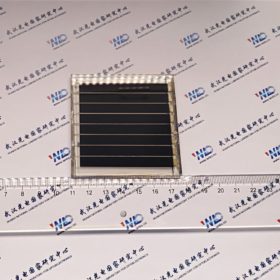
Scientists in China have developed a large-area perovskite solar panel by utilizing diphenyl sulfoxide (DPSO) as an electron acceptor. The device was fabricated via slot-die coating, and featured a parallel-interconnection architecture.

Chinese PV Industry Brief: Xinte seeks to raise $309 million for 100,000-ton polysilicon factory
Furthermore, Luoyang Glass reported first-quarter net profits of RMB136 million (US$21 million) and TBEA Xinjiang New Energy announced the settlement of a dispute over a 99 MW wind farm.
A different angle on perovskite defects
Scientists in China took a closer look at the role of defects in limiting the performance of perovskite solar cells, demonstrating a screening effect that could be tuned to make material defects “invisible” to charge carriers, greatly improving cell performance. Using this approach they demonstrate a 22% efficient inverted perovskite solar cell, and theorize several new pathways to even higher performance.

GCL nears resolution of its $500m senior notes headache
The Chinese poly maker expects to sign off a debt reorganization plan in Bermuda next month and has announced its latest $102 million solar project sell-off.

Floating structure design for offshore PV
Researchers at the Norwegian institute Sintef are testing a special floating structure that Equinor wants to deploy in offshore waters. The structure is built with an anchoring system that is claimed to give the installation enough freedom to cope with the waves.
