Chinese manufacturer looks to pv magazine for its Covid-19 updates
Manufacturer Solargiga referenced our website, rather than official channels, to have a stab at anticipating the possible effects of the public health crisis on the industry as it insisted production lines powered by bargain-basement electricity prices this year would help turn around a $50 million loss for 2019.
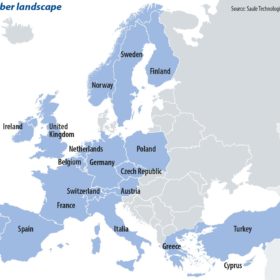
The weekend read: Mobilizing Europe for perovskite PV
As a relatively new and rapidly emerging PV technology, perovskites present an opportunity for the European Union to once again play a prominent role in solar manufacturing. So argues Louis Huber from the European Perovskite Initiative, a group that is trying to coordinate European perovskite PV activities across research, industry and politics.
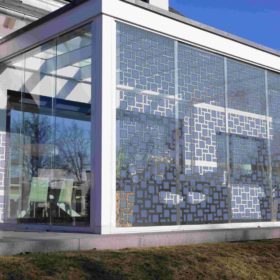
‘Free-form’ organic PV
French organic PV module manufacturer Armor said it began manufacturing free-form PV modules in early April. The new technology will allow the company’s ASCA PV film to be produced in a range of different shapes.
Silver prices expected to drop 3% in 2020
According to the 2020 World Silver Survey 2020 by the U.S.-based Silver Institute, the metal’s price will decline by only 3% this year, despite the impact that the Covid-19 crisis will also have on demand. In the global PV industry, silver demand is forecast to drop 3% from 98.7 million ounces in 2019 to 96.1 million ounces this year.
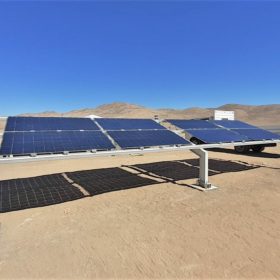
Bifacial panel made in Chile
Atamostec, a private-public initiative supported by Chile’s government-run Production Development Corp. and several industrial partners, has developed a new module. The team claims that the bifacial panel offers an additional annual average gain of 11% compared to monofacial PERC modules with the same cell technology.
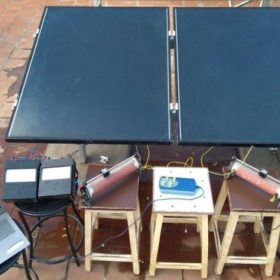
Lowering PV panel temperature with phase change materials
A group of researchers from India is trying to apply a special phase change material to regulate temperature in copper, indium and selenium solar panels. Phase change materials are substances that are capable of storing thermal energy, allowing for the stabilization of temperature.

The raw materials needed for the European Green Deal
A team tasked by the European Commission with estimating the raw material requirements of the European energy transition found if global PV roll-out is high, and the component requirements of certain solar technologies don’t improve by a greater margin, some elements could end up in short supply.
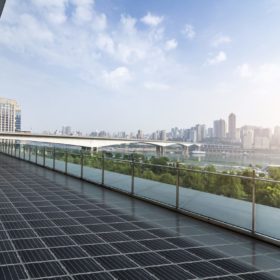
Solar pavement for outdoor applications
Hungarian tech company Platio has developed solar pavement for outdoor applications in urban environments, homes, office buildings, shopping malls, and public infrastructure projects. The pavement consists of solar tiles that may cost between €50 and €80, depending on the size and characteristics of projects.

Covid-19 weekly briefing: A cold wind for APAC renewables, respite for Indian developers and another salary cut for SunPower execs
The coronavirus epidemic continues to batter the global economy, including the solar industry, but falling demand during lockdowns has brought negative energy prices as well as helping drive record solar generation, amid less-polluted skies.
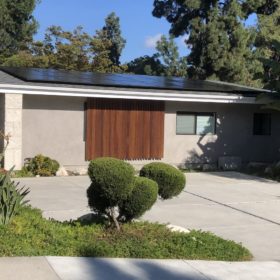
New all-black module with output of 400 W
Solaria says that it will start selling its new all-black panel for residential PV applications in the U.S. market within the current quarter. The monocrystalline module is equipped with a microinverter from Enphase and has an efficiency rating of 20.2%.
