
A new manufacturing process for 19.5% efficient perovskite solar cells
Researchers in China have proposed manufacturing perovskite cells using a pre-nucleation technique. Compared to traditional solvent dripping methods, the approach enables the creation of smaller crystallites in the perovskite films as uncontrolled crystallite growth affects the efficiency and durability of cells.

UK includes solar in new generation capacity auction
The announcement by the Department for Business, Energy and Industrial Strategy of an auction which will include solar next year appears to back prime minister Boris Johnson’s claims to be serious about the nation’s net-zero carbon ambition.
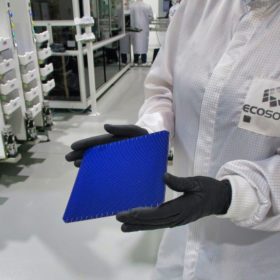
A commercial bifacial HJT solar cell with 24.1% efficiency
The cell is being manufactured by Switzerland-headquartered Ecosolifer with a manufacturing line provided by heterojunction specialist Meyer Burger at a 100 MW factory located in Hungary. The claimed efficiency is yet to be confirmed by an independent party.

Achieving 21.2% efficiency in a perovskite cell thanks to food additives
South Korean scientists have developed two perovskite solar cells based on a polymer made with peppermint oil and walnut aroma food additives, respectively. The new dopant‐free hole transport polymer is said to enable longer durability of the devices and to prevent lead-leakage.
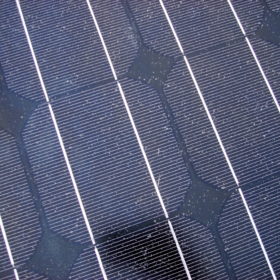
A new PV emulator to evaluate the I-V profile of solar panels
The device is based on a state-feedback adaptive control system in a real-time controller. According to its developers, it can achieve good dynamic response and boasts better bandwidth than current commercial alternatives.
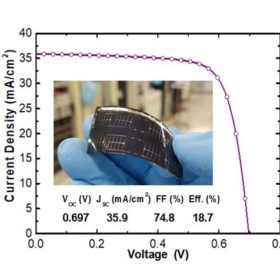
Korean researchers announce flexible CIGS solar cell with 20.4% efficiency
The thin-film cell was manufactured through a low-temperature process and doping with alkali elements.

The weekend read: Building Europe’s battery business
In just three years, Northvolt has progressed from a startup to become Europe’s response to the Asian dominance of global battery manufacturing. pv magazine investigates why Northvolt is setting up units in Sweden, Germany, and Poland, what the firm’s goals are, and how it is attempting to achieve them.

Coronavirus concerns overshadow PV Expo in Tokyo
The annual trade show was not particularly well-attended this year, but market sentiment is still positive in Japan – nobody believes that installations will drop due to the coronavirus outbreak. And the country’s upstream industry – modules, batteries, and hydrogen tech – clearly remains compelling, given the number of brave souls who actually did make the trip out to Tokyo Big Sight this year.

Quantum dot hybrid HTJ cell with 12.82% efficiency
South Korean researchers have developed a hybrid tandem solar cell based on quantum dots and organic bulk heterojunction (BHJ) photoactive materials. They claim that the cell could reach an efficiency rate of around 15% if they continue to reduce energy losses in the quantum dot cell and enhance near-infrared absorption.
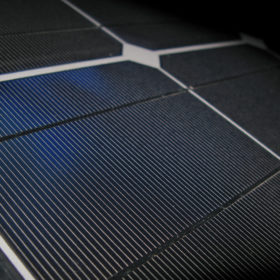
Integrating stress and temperature sensors in crystalline silicon cells
Fraunhofer ISE researchers have integrated stress and temperature sensors within a PV module. They claim that the devices cover a very minimal part of the cells, and that their interaction with the module and the cell itself is quite limited. The sensors can be manufactured as part of a regular cell manufacturing process.
