
Solar cells from space are on the way
A team at the U.S. National Renewable Energy Laboratory has come up with a new process that would reduce the production cost of highly expensive – and highly efficient – gallium arsenide cells.

First Solar reaches $350m legal settlement with shareholders to halt 2012 lawsuit
The U.S. thin-film manufacturer continues to deny having misled stockholders over solar module defects between 2008 and 2012 and said the settlement had been reached to close the historic legal action and permit the company to remove the uncertainty associated with it.
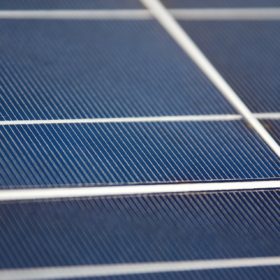
UK researchers confirm correlation between micro-cracks and hot spots in polycrystalline cells
A research team from the University of Huddersfield used electron microscopy to analyze micro-cracks in 4,000 polycrystalline silicon solar cell samples. The results showed power losses may vary from 0.9-42.8%, and increased temperatures due to micro-cracking may favor the formation of permanent hot spots in the cells.
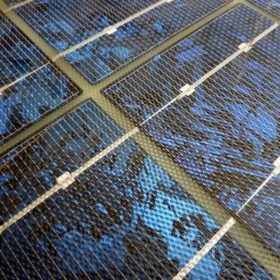
US scientists claim clear-sky irradiance model provides better results for module testing
Researchers at the American Institute of Physics have used the clear-sky irradiance model developed by the National Renewable Energy Laboratory to measure the degradation rates of solar panels at a testing field in Germany over five years. The scientists say the model, when combined with real-world data, offers an efficient tool to evaluate the aging of PV technology.

Newly re-listed JA Solar unveils production expansion plans
The Chinese manufacturer debuted on the Shenzhen exchange in mid December, after de-listing from New York’s NASDAQ in 2018. The company plans to roll out 10 GW of new module capacity and 5 GW of cell lines over four years.

Chinese investor buys 14% stake in Comtec Solar
Sun Da has moved to become the lithium energy storage and electric vehicle battery company’s second largest investor, raising HK$10.3 million for the business in the process.
Solar-plus-storage will start to make big inroads in the year ahead
By this time next year we may be able to wave goodbye to that old chestnut about renewables endangering security of supply. Elsewhere, the price of lithium – and the products it goes into – could go either way after tanking this year.
Indian PV to take off after gloomy 2019
India’s annual solar installations are set to exceed 10 GW in 2020, following a year marked by political uncertainty, module price increases associated with safeguard duties, and a lower number of awarded tenders. The outlook for battery energy storage installations for solar projects is particularly bleak, however, as such combinations in India can cost three to five times more than standalone renewable projects.

The year in solar, part IV: More storage and hydrogen advances as solar just kept getting cheaper
Battery innovations started to come thick and fast this quarter as the hunt for alternatives to lithium-ion intensified and the latest slew of solar tenders indicated the relentless pressure on solar power generation costs was showing no sign of abating.

The year in solar, part II: A lively show season, more legal shenanigans and rising panel efficiencies abound
Intersolar Europe is always a key date in the solar calendar but this year’s show had it all, including three panel-smuggling arrests. Elsewhere, wafers were getting bigger, efficiency records were tumbling and new technologies were emerging. There was also more news on the solar car ports fad and Hanwha’s ongoing legal tussle.
