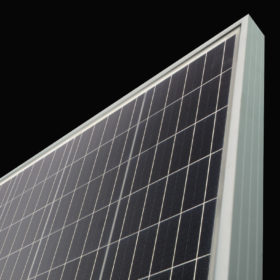
Jinko to add another 5 GW of mono wafer capacity in Leshan
The solar manufacturer’s ever-accelerating production capacity expansion plans currently foresee 10 GW of mono wafers being pumped out at the Sichuan facility every year from the second quarter of 2020 – and only a fool would bet against that timetable being bettered by the time April rolls around.
EU lender pitches in for LG Chem battery gigafactory in Poland
The European Bank for Reconstruction and Development is lending €250 million for a project which has expanded from producing an initial 100,000 EV batteries per year to an hoped-for 1 million by 2022, creating 1,000 new jobs along the way.
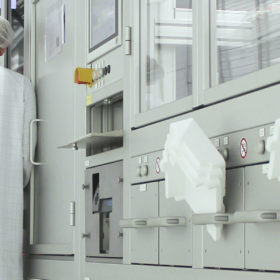
Valoe’s Lithuanian gamble rides on latest fundraising attempt
The Finnish solar manufacturer must raise €3.5 million from a convertible bond issued on Monday and which closes on December 18. Generate the cash and production is expected to start at the Solitek facility in Vilnius early next year. Fail, and (almost) all bets are off.
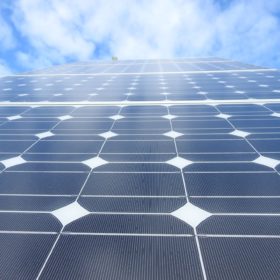
European solar manufacturer body hits out at EU focus on post-production eco labelling
The European Solar Manufacturing Council says a decision by policymakers to disregard the carbon footprint of imported solar products ‘makes absolutely no sense’. Talk of ‘jobs which require a rather low qualification’, meanwhile, is unlikely to heal the widening rift with solar project developers and panel installers.
Mystery deepens over management responsible for Solibro insolvency
Chinese thin film manufacturer Hanergy told pv magazine in August the manufacturing division of Solibro had ceased to be one of its subsidiaries in December 2015 but a company presentation issued six months later would appear to indicate otherwise. Hanergy has been approached for comment.
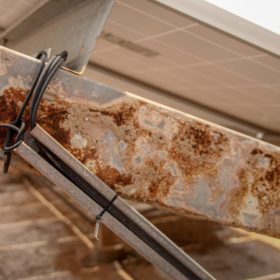
Is India ready for solar waste mountain?
Opinion is divided over the urgency of addressing the issue. While some developers feel the 25-year lifetime of modules offers plenty of time to prepare an action plan, other industry voices claim Indian-made products don’t last half that long and one recent report pointed out waste is already piling up thanks to defects and faulty installation.

Upgrades needed to process larger wafers, says VDMA
In an update to its International Technology Roadmap for Photovoltaics, German engineering association the VDMA notes standardization of wafer size is a topic of great interest to the country’s PV equipment manufacturers, and modifications to lines will be needed to process wafer pieces larger that 161mm.
Solibro ceases operations
Insolvency proceedings have been opened against the assets of the German thin-film solar manufacturer. A proposed reorganization failed because investors did not provide sufficient capital. Some 180 employees will lose their jobs.
Longi demonstrates 20% bifacial boost
In a white paper published this week, Chinese module maker Longi Solar shares six months of data from a testing site in India that was built in cooperation with German testing institute TÜV Rheinland. The results show energy yield gains of around 20% for both bifacial mono PERC and n-type modules.

Swimming electrons in perovskite nanocrystals
Research from Canada has revealed liquid-like lineshape dynamics in cesium-lead iodide perovskite nanocrystals. The findings could be used to produce cheaper and more efficient perovskite cells, researchers claim.
