
New antenna for a better photon harvest
An Italian research team has developed a device that it says can easily be integrated into a PV cell, and can boost its efficiency by converting more light particles into a high energy state before they are absorbed by the cell. The scientists claim that their innovation could offer a green‐to‐blue photon upconversion yield as high as 15%.

The weekend read: Size matters
The latest development on the module front sees manufacturers adopting larger wafer sizes in order to reach the industry’s raised expectations for power output. Older “M2” wafers have been the standard in recent years but now appear to be on the way out. Several theories about optimal size are gaining ground, but the future direction of the standard is still far from clear.
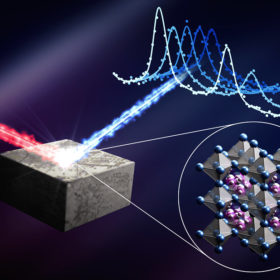
New configuration gives perovskite cells 18% efficiency
Cesium lead black perovskites could be interesting for solar cell development if their crystals are observed in their less efficient but more stable beta phase. The efficiency shortfall can be solved by healing emerging cracks in the surface of the cell using a choline iodide solution, according to an international team of scientists.

Singyes shareholders show discontent
The holders of almost six million shares in the company voted against the reappointment of chairman and CEO Liu Hongwei as a non-executive director. On Liu’s watch the company has had to turn to a state bail-out from China to help ensure its survival.

REC Silicon prepared to power down the rest of its operation
The Norwegian polysilicon and silane gas producer has announced it will listen to offers for its production facility in Butte Montana after mothballing its other manufacturing operation – at Moses Lake, Washington – in the summer.

GCL wants a 1 GW perovskite cell production line in place by 2022
With the Chinese manufacturer claiming it has already hit 16% conversion efficiency on a large panel, a recent perovskite conference heard predictions the technology will make up the next generation of PV cells – provided it avoids the pitfalls experienced by thin-film devices.

Belt and Road to bring 1 GW of solar to Italy
Chinese state-owned PV manufacturer Jetion Solar says it has signed a deal with Italian government-owned oil and gas major Eni to develop a slew of new solar projects across five regions in the next three years in a deal worth €2 billion.
How will China’s electricity price reform affect solar?
The nation’s plan for grid-parity solar – brought forward to ease a mounting public PV subsidy debt burden – could be left in ruins by a newly-announced scheme to part liberalize the electricity price, itself motivated by a need to bail out financially stricken state-owned power companies.
Longi unveils results of bifacial module test
The exercise, conducted on Longi PERC bifacial modules by Germany’s TÜV SÜD at a test field in China, showed surprisingly higher gains in panels getting light reflection from painted-surface and grassland albedo. It also showed, Longi claimed, bifacial panels operate at lower temperatures than single-sided alternatives.
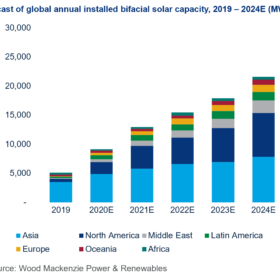
WoodMac: Bifacial module capacity will exceed 21 GW by 2024
Increasingly affordable and free from the Trump administration’s solar tariffs, bifacial modules are only set to get more popular in the years ahead. In its first report on bifacial PV, WoodMac predicted the technology will make up 17% of global installations five years hence, quadrupling the share it will have this year.
