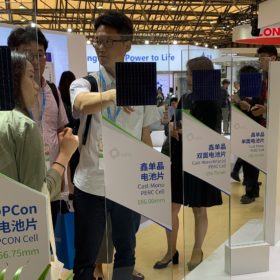
Innovation and uncertainty mark SNEC 2019
There was plenty of innovation on display at this year’s SNEC, which closed yesterday afternoon at the Shanghai New International Expo Center. The three-day exhibition ran from Tuesday to Thursday, was well attended and still ranks as the world’s largest solar energy trade show.
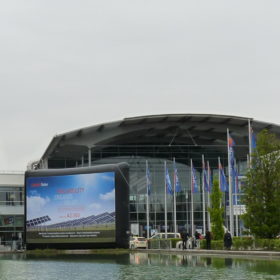
Three arrests at Intersolar Europe for circumventing EU’s minimum module price
German customs officers executed two arrest warrants during the Smarter E show in Munich. The public prosecutor’s office in Nuremberg-Fürth also confirmed another arrest, connected to an existing investigation of a Chinese PV manufacturer. The arrested executives were allegedly involved in commercial smuggling of solar modules, the customs authorities and prosecutor told pv magazine. The authorities believe minimum import prices for crystalline solar modules from China, in effect until September, were circumvented and millions of euros in payments were evaded.
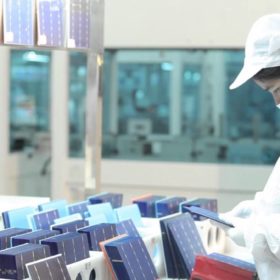
Jinko and REC petition for review of Hanwha patent concerned in US lawsuit
In the petition, the manufacturers claim their Korean rival’s patent assertions should be declared invalid as there is evidence the innovations they refer to were either not new or were obvious steps forward.
GCL-Poly moves to become pure manufacturer
The polysilicon, ingot, wafer, cell and module giant made two huge announcements this week, with plans to almost double wafer manufacturing capacity just as it moves to sell off its PV project development business to state-owned energy giant China Huaneng Group.
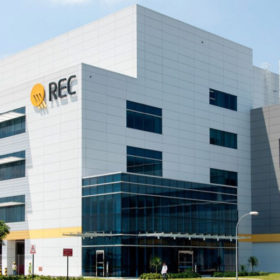
Joining the high-efficiency gang
In a conversation with pv magazine, REC vice-president for sales in the EMEA region Ivano Zanni describes the new strategy of the Norwegian manufacturer following the launch of its high-efficiency, half-cut mono n-type heterojunction module. REC expects annual production capacity for the panels at its factory in Singapore to increase to 600 MW by the end of next year, and that the company’s total capacity will reach 2 GW.
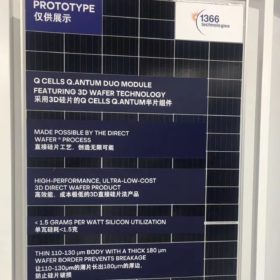
Prototype modules featuring ‘3D wafers’ on show at SNEC
New modules incorporating American company 1366 Technologies’ 3D direct wafers were unveiled yesterday at the SNEC trade show in Shanghai. The prototype modules are produced by Korean manufacturer Hanwha Q Cells. The two companies have a strategic partnership going back several years, and are ramping up a wafer factory near Q Cells’ module facilities in Malaysia.
Canadian Solar bags 500 MW panel order from Spain
The modules will be used by U.K. developer Solarcentury for its Cabrera and Talayuela Solar projects in southern Spain.
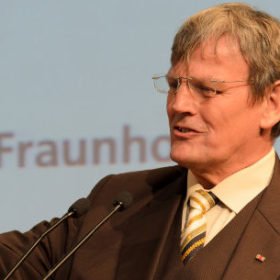
European Solar Manufacturing Council chooses Eicke Weber as chairman
The former director of Fraunhofer ISE will be officially elected at a general assembly planned for September. The ESCM wants a strong Europe to be part of the Fourth Industrial Revolution and also pay attention to sustainability.
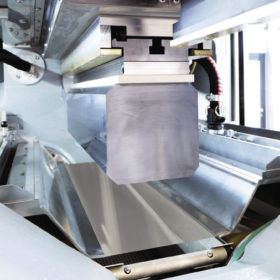
Zhonghuan Semiconductor and GCL-Poly to expand production of mono wafers by 25 GW
The joint venture of the two giant manufacturers will expand its capacity from around 30 GW currently to 55 GW over the next three years. This plan is expected to require an overall investment of $1.34 billion.
New global sustainability standard for solar modules in the works
Dustin Mulvaney is a solar industry veteran. Associate professor at the Department of Environmental Studies, San José State University, in the United States, he recently published a new book this April, “Solar Power, Innovation, Sustainability, Environmental Justice”, which looks at creating a “more sustainable and just solar industry for the future.” A part of this is the creation of a new global sustainability module standard. He spoke with pv magazine as part of the launch of our new UP initiative.
