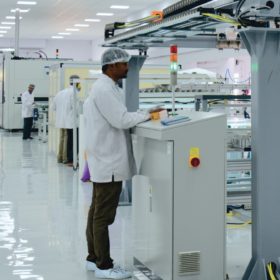
Indian manufacturing-linked solar tender now reportedly oversubscribed
A new series of tweaks by Solar Energy Corp. of India appear to have paid off, as the organization’s ambitious, manufacturing-linked 7 GW solar tender has been oversubscribed by 1 GW.
The weekend read: A responsible compromise?
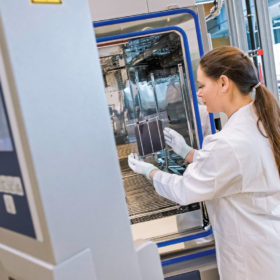
Toxicologists are struggling to follow the pace at which perovskite solar cells race from laboratory test benches to factory production lines. While researchers continue to assess the health and safety risks stemming from the lead used at the core of these new materials, the startups commercializing them argue that established encapsulation techniques and sound recycling schemes are enough to safety-proof their potentially disruptive technology and offset broader environmental threats.
Troubled Indian manufacturing-linked solar tender now reportedly oversubscribed
A series of new amendments by the Solar Energy Corporation of India appear to have paid off, as the organization’s ambitious manufacturing-linked solar tender has reportedly ended up oversubscribed by 1 GW – of the capacity offered as an incentive at least.
International research group claims 8.8% efficiency for amorphous solar cell
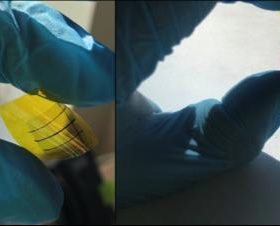
The new cell is based on a p-type transparent conductor made of carbon nanotube fibers. The device is said to offer 16% more efficiency than rival amorphous cells.
Benefits and risks of lead halide perovskite photovoltaics
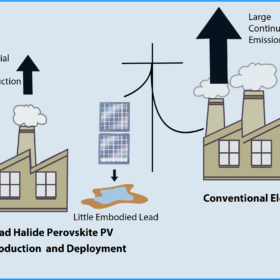
Lead halide perovskite PVs (LHP-PV) have rapidly emerged over the last decade as a potentially viable thin film PV technology, because of their high efficiency and potential for low manufacturing costs. However, concerns remain over potential impacts to the environment and human health arising from the use of toxic lead in LHP-PVs.
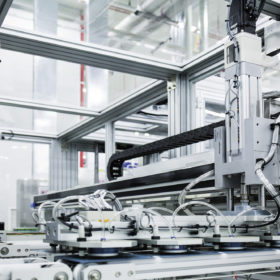
Hanwha vows ‘immediate appeal‘ in event of ITC summary decision
With the Q Cells solar business warning it is preparing an instant appeal if a U.S. ITC judge rules against it Stateside, the chemical company parent announced its solar panel business saw a year-on-year, third quarter rise in revenue from KRW818 billion to KRW1,638 billion.
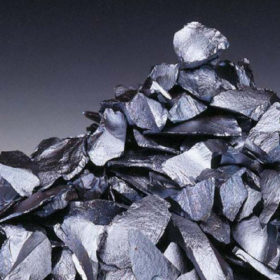
Daqo pushes poly production cost below $7/kg
Chinese polysilicon giant Daqo New Energy posted $83.9 million in revenue in the third quarter for gross profit of $18.1 million. The company has an additional 35,000-ton production facility set to come online this year.
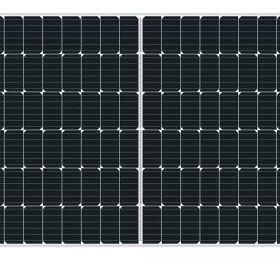
DMEGC launches half cut monocrystalline module with 440 W output
The new 24.5kg, PERC monocrystalline product from DMEGC is said to have an efficiency of 19.78%. The panels are available in glass and white-backsheet formats.

Three steps to fast-charging potassium batteries
Scientists led by Moscow’s Skolkovo Institute of Technology have drawn upon several of their recent battery material innovations to create a potassium-ion device. The institute says its development will pave the way for ultrafast and durable, high capacity metal-ion batteries, to supply rising demand for energy storage innovations.
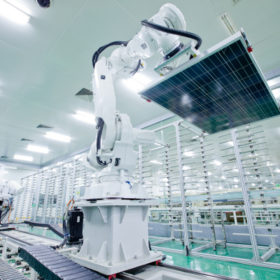
Jinko expects US authorities to reject Hanwha Q Cells patent infringement allegations
Korean PV manufacturer Hanwha has accused competitors in the U.S., Germany and Australia of having infringed its patents. In America, Jinko Solar – as well REC and Longi Solar – applied for an interim review of a patent at the International Trade Commission. Now, Jinko says it expects the judges to rule in its favor.
