Webinar Q & A: How can investors mitigate the risk of LID and LeTID?
What is your recommendation for investors when buying PERC modules? Can LeTID loss be completely recovered in the field? Can one be sure that there is no LID and LeTID in n-type cells? Presenters, Andrea Viaro, head of technical service Europe, JinkoSolar, Stefan Roest , CTO, Eternal Sun & Spire Solar and Paul Grunow, technology consultant, board of the PI Photovoltaic Institute Berlin AG answer these and other questions from a recent pv magazine webinar.
Consolidation of Taiwanese PV industry continues with another shutdown
Taiwanese manufacturer E-Ton Solar said it will halt solar cell production due to strong price pressure. It is now seeking to sell two of its three manufacturing facilities in southern Taiwan, while its shares have been suspended from trading on Taiwan’s stock exchange.
Taiwan’s PVEVL expands performance tests to perovskite, quantum dot and organic solar cells
Despite the difficulties its solar manufacturing industry faces, the Taiwanese government is ramping up its R&D efforts to measure the efficiency of what it calls “new-generation light-driven photovoltaics”.

The prospects for solar after the Indian elections
Narendra Modi’s BJP party is seeking re-election with the aim of ensuring the electrification of all railways by 2022 and turning renewable energy into a popular movement with steps including an emphasis on solar farming. Even if the elections spring a surprise, however, the renewable momentum is unlikely to slow as no government can afford to roll back the clean power tide.
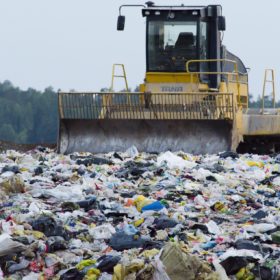
PV waste a rising challenge for Bangladesh
With concerns over the mountains of PV system waste that will one day pile up around the world, Bangladesh is no exception – the nation currently has no solar panel recycling policy.
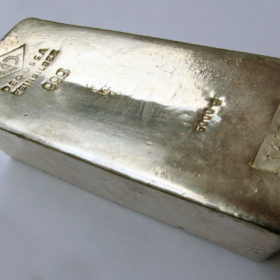
UK researchers warn of potentially rising silver costs
A study has highlighted that the two growth phases of solar panel manufacturing – after the 2008 global downturn and again after 2011 – coincided with higher prices for the precious metal.
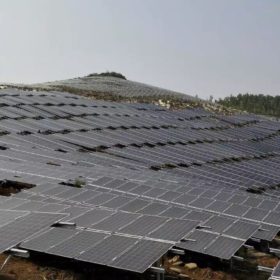
New figures reveal effect of policy vacuum on China’s large scale solar
Just 5.2 GW of new PV generation capacity was installed in the world’s biggest solar marketplace in the first three months of this year. And virtually all of that was made up of small systems as developers wait to see what emerges from solar policy discussions in Beijing.
GCL Poly secures more public backing with second investment fund deal
The polysilicon manufacturer will be one of the partners in a fund for the city of Leshan which appears to be planned chiefly to upgrade the poly production facilities of one of the company’s subsidiaries.
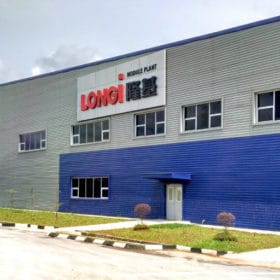
Longi plans two new production lines in China’s PV heartland
The solar manufacturer has revealed plans to invest around $875 million in production capacity for monocrystalline ingots, wafers and cells – and expects to raise a chunk of the cost with a shares issue this week.
GCL Poly subsidiary secures public backing for its operations in Xuzhou
A subsidiary of the poly maker and PV developer will commit more than $200 million of its cash to an investment fund which could then finance projects for one of its fellow GCL Poly Energy Holdings businesses.
