
Hanergy Thin Film shareholders must accept privatization share swap or be left with dead stock
It turns out the cash element of the HK$54.9 billion ‘cash and stock replacement’ plan to privatize Hanergy’s Hong Kong listed thin film division amounts to around HK$0. Thin Film shareholders face a Hobson’s Choice between a convoluted scheme laced with uncertainties or writing off their stock.
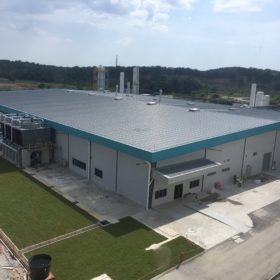
1366 Technologies and Hanwha Q Cells to open wafer factory in Malaysia
The U.S. wafer maker and the Korean module manufacturer expect to ramp the Malaysian factory no later than September. The fab is next to Hanwha’s existing cell and module facilities and 1366 Technologies plans to produce its Direct Wafers on a gigawatt scale for less than $0.20 per piece.
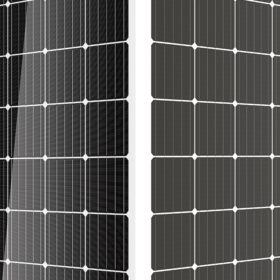
Trina to ship 16 MW of its bifacial panels for French projects
The Chinese manufacturer will supply EDF with around 45,000 bifacial, double glass Duomax Twin panels. The French utility will use the modules for two large-scale projects selected through tenders held by energy regulator CRE.

Xinyi sees the positives despite a bruising year for solar glass
The manufacturer endured a rollercoaster ride in 2018, as China’s 5/31 policy decision saw prices plunge before staging a partial recovery. But the Wuhu-based company saw an uplift in its development business and is forging ahead with production expansion amid bullish predictions for the future of PV.

India slaps anti-dumping duty on east Asian EVA sheets
Following a petition by domestic PV panel manufacturers, India’s Directorate General of Trade Remedies has recommended the imposition of duties ranging from $537-1,559/metric ton on solar ethylene vinyl acetate sheets imported from China, Malaysia, Saudi Arabia and Thailand.

Trump trade announcement offers hope of breakthrough
The president last night announced he is hoping to arrange a meeting with Chinese counterpart Xi Jinping to bring an end to the long-running trade stand-off between the two nations, provided further progress can be made in negotiations.

The weekend read: Double glass can spell double trouble
Glass-glass modules are built to survive the toughest conditions and can deliver module lifetimes far exceeding the 20-30 years expected of glass-foil. The module concept is ideally positioned to catch the building bifacial wave, but only if quality concerns are addressed, warn some experts in the field.

The promise of a 100% renewable energy world
The oldest solar organization in the world, the International Solar Energy Society, dates back to 1954. President David Renné tells pv magazine about India’s solar dreams, the next best thing in solar technology and what renewables hold for the world’s future.
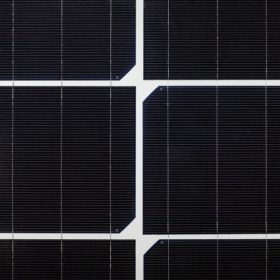
Markets started to embrace non-conventional modules in 2H 2018
Analysts at PV InfoLink said the number of markets open to new technologies such as half-cut and shingled panels is constantly rising. Australia, Japan, Spain, the UAE and Brazil were cited as the hottest markets for Chinese “special modules”. Total annual production in China for half-cut modules, which are set to increase their market share this year, should reach around 20 GW.

Australian scientists use hydrogen atoms to boost solar cell efficiency
Researchers want to better understand how hydrogen atoms may improve the performance of phosphorus-doped polycrystalline silicon (poly-Si) films for passivating contact solar cells.
