
French regulator proposes tightening up controversial carbon footprint rules
In a report which states utility-scale PV project development in France can cost as little as €600 per installed kilowatt, the CRE has made recommendations including factoring in transport and full supply chain costs into the calculation of how environmentally friendly solar panels are.
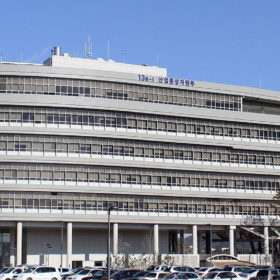
South Korea to prioritize PV projects with low carbon footprint, high-efficiency modules
The Korean government is planning to introduce new rules for carbon footprint certification, minimum efficiency levels and industrial standards for solar and wind energy. The measures are intended to make the domestic renewable energy industry grow while securing sustainable competitiveness, the administration said.

Xinyi Solar shares issue to raise cash for production expansion and PV project development
Almost 5% of the Chinese solar glass manufacturer’s stock will be issued in a bid to generate $167 million towards the cost of two fabs planned in Guangxi next year. Xinyi also wants to expand its successful project development business.
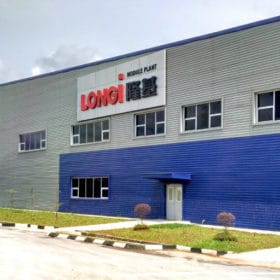
Longi’s 5 GW high-efficiency mono PERC factory will be at full capacity ‘soon’
The Chinese panel maker is already producing bifacial half cut modules at its new Anhui fab after the completion of an initial 2.5 GW phase of operations. And the company president confirmed Longi is on track for 45 GW of mono wafer and ingot production capacity next year.
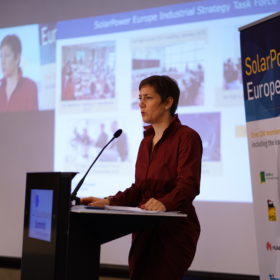
SolarPower Europe’s industrial strategy is almost ready
At the Solar Power Summit in Brussels today, the industry group said it is preparing to launch a supply-side oriented industrial policy for the PV sector in Europe. The manufacturing sector on the continent has been hard hit since 2012, and has been buffeted by a range of unfavorable policy decisions.
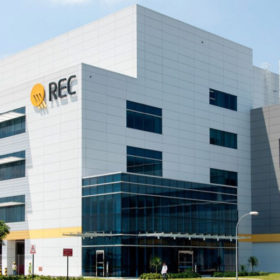
REC Group reacts to Hanwha Q Cells lawsuit, says legal action in Germany not started yet
The Norwegian manufacturer said Hanwha Q Cells’ legal action in Germany has not started yet, and it will take all necessary steps to defend itself against patent infringement allegations.
Longi rejects Hanwha Q Cells allegations and provides details on patent issue
The Chinese monocrystalline module maker said it had not been notified of the legal action by its Korean rival. Longi claimed there is considerable uncertainty over the validity of the patents at the root of the lawsuits, which the Chinese defendant says relate to ALD technology. Longi says it uses PECVD technology for cell production.
Jinko says Hanwha Q Cells lawsuits are without technical or legal merit
The Chinese module maker “categorically refutes” allegations made by its rival that it is using Hanwha’s passivation technology on its solar cells. Jinko added, it does not expect any disruption to normal operations as a result of the lawsuit.

Softbank to invest $10 million in device-integrated solar specialist Exeger
SB Energy Corp, a subsidiary of Japanese multinational Softbank, has announced a strategic partnership with Swedish company Exeger, which produces dye sensitized solar cells designed for integration into consumer electronic devices. Under the terms of the agreement, Softbank Group will invest $10 million in Exeger, with SB Energy Corp set to assist global rollout of the technology.
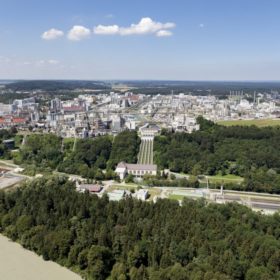
Wacker expects profits to be hit by falling polysilicon prices
The German poly manufacturer expects to increase sales in the current financial year, however EBITDA is expected to be down as much as 20% as average prices for polysilicon will continue to decline.
