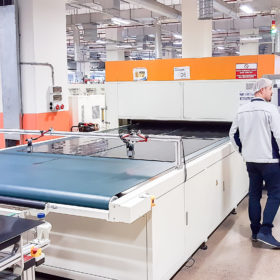
PI Berlin: Asia leading the way for module quality
Quality assurance provider PI Berlin has found the solar industry has made significant improvements to module quality in the past six years and that, perhaps surprisingly, manufacturers in China and South East Asia are setting the standard by producing higher quality modules, on average, than other regions.
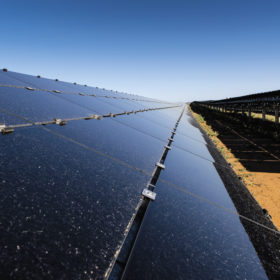
Solar will rebound this year with more than 100 GW of new capacity
Wood Mackenzie’s number-crunchers are the latest analysts queueing up to predict a bumper year ahead for PV, with falling prices, rising efficiency rates and booming markets outside China all on the cards. And it could be a make-or-break year for mega-projects, says Wood Mac.
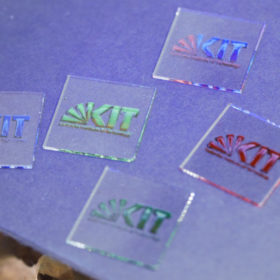
European researchers want to develop digitally printed, highly efficient and stable perovskite PV modules
German and Greek scientists are working with industrial partners on the technological feasibility of making solar modules based on perovskite absorbers. The prototypes should be freely configurable in size, shape and color.
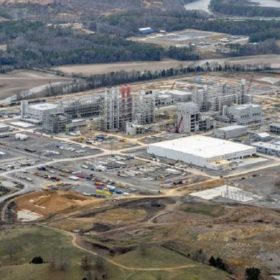
Wacker’s polysilicon business sees profit and turnover fall
The Munich-based chemical company posted an increase in sales but the fall in polysilicon prices last year and the temporary closure of US production after a hydrogen explosion had a significant impact on the results.

Hanwha Q-Cells completes internal going-private reorganization
The South Korean PV manufacturer has finalized its plan to merge with Hanwha Solar. The company will no longer be listed on the Nasdaq stock exchange and will continue as a wholly owned subsidiary of Hanwha Chemicals.
Energytrend: Stockpiles down, utilization and prices recovering
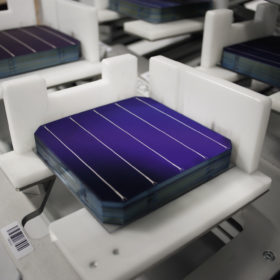
The Taiwanese market research company has published its latest price trend data for PV modules, cells, wafers and silicon. Across the value chain, rising demand is causing stockpiles to dwindle and utilization rates to rise. Prices are rising in China as well as for high-efficiency products. Module prices have stabilized.

China installed 43.6 GW of solar last year – despite 5/31 New Policy
Central subsidies may have been cut back but the domestic market rebounded quickly and overseas shipments soared on the back of rising production volumes and ever cheaper module prices.
PERC cell efficiency records tumble
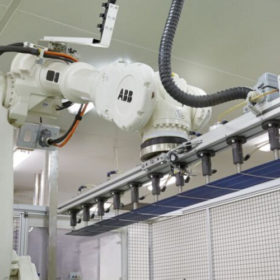
Chinese manufacturers Risen Energy and LONGi have both announced conversion efficiency records for PERC cells as the twin quest to drive down costs and increase energy output shows no sign of abating.

Solar investment slid on the back of cheaper modules and China setback
The world again saw more than $300 billion of clean energy investment in 2018, according to BloombergNEF, and although wind narrowed the gap on solar, plunging module prices skewed the figures as PV capacity additions rose 10 GW.
Hanergy welcomes latest policy noises to come out of Beijing
The thin-film manufacturer and project developer says the Chinese government’s package of measures to drive subsidy-free solar projects will ensure a proliferation of new capacity additions and consolidate the strength of big players like itself.
