
Demand for silver in global PV industry rose 19% in 2017, says Silver Institute
Approximately 76% of silver demand in the solar PV industry was used last year in frontside pastes, while the remaining 24% was used in backside pastes. Comoditization, however, is having detrimental effects on producers’ margins.
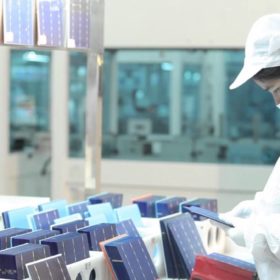
Webinar Q&A: Reaching higher standards with cell and module innovation
The next generation of solar PV modules will see different technologies combined at both the cell and module level. That was the main conclusion of a recent pv magazine webinar, powered by JinkoSolar. Overall, a great deal of interest from participants was generated. Here, Andrea Viaro, Head of Technical Service Europe for JinkoSolar, responds to their questions.
SunPower to buy SolarWorld Americas
The two biggest names in the solar trade fight will now be one company. SunPower will again be a U.S. manufacturer, and SolarWorld will begin producing P-Series modules.
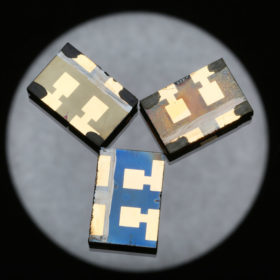
EU grants €5 million to perovskite research consortium
Belgian institute Imec will be the coordinator of a project involving many of Europe’s leading research organizations, which will focus on developing stable, scalable, low cost PV modules based on perovskite technology. The project, named ‘ESPResSo’ has received more than €5 million in funding from the European Union.
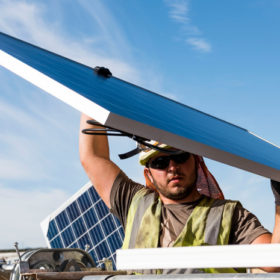
US: SEIA reports 18 companies reducing solar deployment, workforce in 2018
U.S. solar trade organization, Solar Energy Idustries Association (SEIA) has listed cancelled investments and hiring as well as job losses in its comments supporting requests for exclusion from Section 201 tariffs.

Fraunhofer ISE, Schmid develop production line concept for custom design modules
German research institute, the Fraunhofer Institute for Solar Energy Systems (ISE) and equipment supplier, Schmid have jointly developed a production line for customizable modules for building-integrated projects. According to Fraunhofer ISE, the concepts developed by joint study could reduce the production cost for BIPV modules as much as 35%.
Solargiga reports decline in shipments, turnover due to lower ASPs
In the first quarter of this year, the Chinese solar manufacturer registered a 34% drop in revenue, while quarterly shipments also declined around 19% year-on-year, to 462 MW.

Hanwha Q Cells shuts down wafer production in China
The company’s wafer factory in China was closed in the fourth quarter of 2017. Hanwha Q Cells, however, intends to further produce wafers at its new factory in Turkey.
The weekend read: China’s monocrystalline boom
Two large Chinese ingot and wafer makers have announced bold plans to expand their capacities beyond anything seen to date. In the process they could transform the entire upstream solar manufacturing landscape.

Indian government initiates anti-dumping investigation for the imports of EVA film for PV modules
RenewSys India has submitted a petition to the Directorate General of Anti-Dumping & Allied Duties for the imposition of anti-dumping duties on imports of Ethylene Vinyl Acetate sheets for solar modules from China PR, Malaysia, Saudi Arabia, South Korea, and Thailand. Evidence of dumping has been found.
