Fraunhofer ISE, Schmid develop production line concept for custom design modules

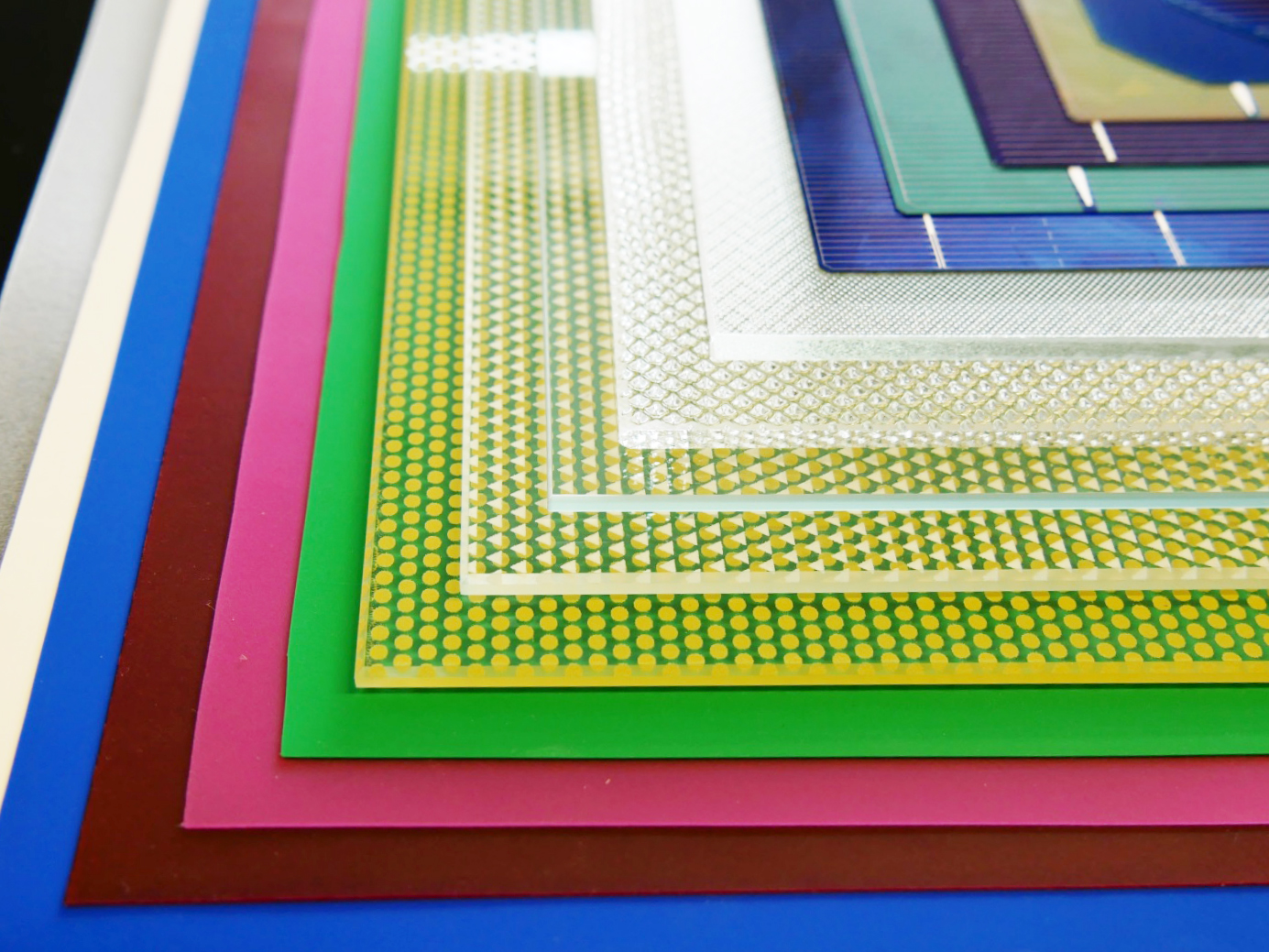
Building integrated photovoltaics (BIPV) has shown plenty of potential in recent years; however, several issues must still be addressed for the technology to see more serious growth. Chief among these are demands that architects and the building industry place on module design, where aesthetics and design choices are just as important as performance.
Looking to address this problem at the production side, Fraunhofer ISE and Schmid undertook a project investigating existing standards and design limitations for BIPV modules, as well as analyzing the market potential and requirements.
Based on the findings of the study, which was funded by the German Federal Ministry for Economic Affairs and Energy, the two organizations have developed two new production line concepts for flexible series production of BIPV modules.
The production line concepts consider the need to quickly adapt to different module designs, and the modifications needed for integration into different buildings – such as module format, glass color/thickness, solar cell matrix and encapsulation material.
“Our results showed that the combination of series production and freedom of design do not compromise each other,” says Stefan Sellner, Project Head at Schmid. “We also demonstrated that we can reduce the costs by an average of 35 percent compared to conventional manufacturing processes of BIPV modules.”
This content is protected by copyright and may not be reused. If you want to cooperate with us and would like to reuse some of our content, please contact: [email protected].

Please login to comment

[…] Schmid Group has secured n equipment order from an undisclosed green hydrogen company. The German specialist said it will provide equipment for one of the world’s largest electrolysis factories. Wet chemical plant systems will be supplied under the contract, which is scheduled for installation in the first half of 2024. “The machines play an important role in the production of central components made of stainless steel, which are subsequently assembled into stacks during further processing,” said Schmid Group. “These stacks will in turn be integrated into the electrolysers used to produce green hydrogen.” […]
[…] Schmid Crew has secured n instruments expose from an undisclosed green hydrogen company. The German specialist said it goes to give instruments for view to be one of the most field’s biggest electrolysis factories. Wet chemical plant programs will seemingly be equipped under the contract, which is scheduled for set up in the principle half of of 2024. “The machines play a extraordinarily most principal feature in the production of central system manufactured from stainless metal, that are therefore assembled into stacks all the design thru additional processing,” said Schmid Crew. “These stacks will in turn be integrated into the electrolysers weak to create green hydrogen.” […]
[…] Schmid Group has secured n equipment order from an undisclosed green hydrogen company. The German specialist said it will provide equipment for one of the world’s largest electrolysis factories. Wet chemical plant systems will be supplied under the contract, which is scheduled for installation in the first half of 2024. “The machines play an important role in the production of central components made of stainless steel, which are subsequently assembled into stacks during further processing,” said Schmid Group. “These stacks will in turn be integrated into the electrolysers used to produce green hydrogen.” […]