
Silver prices to fall by $4/toz by 2030, World Bank says
A recently published report on commodity markets published by the World Bank indicates that the recent decline in commodity prices for silver is likely to continue over the next 10-20 years. The looming trade dispute between the U.S. and China is impeding investor trust, as future outlook remains murky.
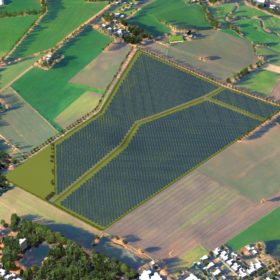
Powerfield abandons plans to build 300 MW module factory in the Netherlands
The Dutch company said its project became unviable due to rapidly declining module prices. For its planned solar parks in the Netherlands, however, the company will rely on modules provided by the Dutch panel maker Energyra.
Panasonic, Tesla reveal plan to produce lithium batteries in China
Tesla’s batteries may soon be Made in China. The announcement was made by Panasonic CEO Kazuhiro Tsuga during a conference accompanying the company’s 2018 fiscal-year results.
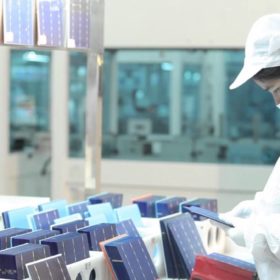
JinkoSolar achieves 23.95% efficiency for p-type mono cell
Chinese module manufacturing heavyweight JinkoSolar has announced the achievement of a new world record efficiency for a p-type monocrystalline silicon cell, at 23.95%. The record has been confirmed in testing by the Chinese Academy of Sciences.
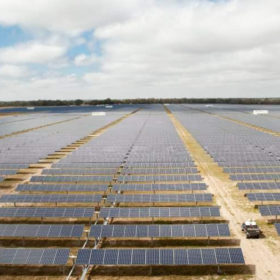
SunPower to exit utility-scale solar development
The company is pivoting to DG solar and expanding its manufacturing as it continues to struggle with profitability.

Manz posts 81% revenue growth in first quarter
Sales were particularly strong in the solar segment. Despite the considerable improvement, the German PV equipment provider still remains in debt.
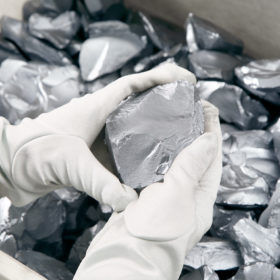
China’s Sunpower Group picks up $12.5 million polysilicon equipment order
Chinese integrated energy company Sunpower Group Ltd today announced the securing of equipment supply contracts worth CNY 80 million (US$12.5 million) with Xinjiang Xinte Energy, a subsidiary of TBEA Co Ltd.

India: First 1 GW tender for 5 GW solar park expected soon – Interview
The 5 GW PV park, planned for the Dholera Special Investment Region of Gujarat, will become the world’s largest project of its kind, when complete. It is expected to attract an investment of US$3.7 billion and generate employment for more than 20,000 people, says Jai Prakash Shivahare, managing director at Dholera Industrial City Development Limited. He takes time out to speak to pv magazine about the mega solar project.

Enphase sees CFO leave, presents stable numbers for Q1 2018
The American microinverter maker is reporting only modest losses in its Q1 results, a significant improvement from a year ago.
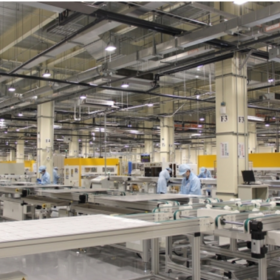
Taiwan’s biggest PV module manufacturing fab inaugurated
The first solar PV modules have come off of TSEC Corp.’s new 1 GW manufacturing facility – the biggest of its kind in Taiwan.
