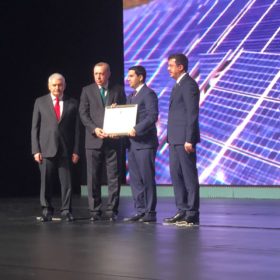
EkoRE plans 1 GW vertically integrated PV factory in Turkey
The Turkish solar company is planning to set up the manufacturing facility in the Bor Organized Industrial Zone (OIZ) of Niğde, in Central Anatolia. After the project was accepted under a special incentive program by the Turkish government this week, EkoRE is now seeking investors.
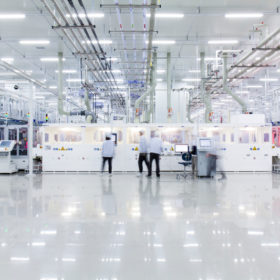
Hanwha Q Cells sees net loss in 2017, despite increased shipments
Korean module manufacturing giant, Hanwha Q Cells reported a net loss of US$9.2 million for the full year 2017, falling from a net income of $127.5 million in the previous year. The company cited a one-time loss associated with the discontinuation of wafer manufacturing as the main reason for the decline.

GCL-Poly creates JV to build new 20 GW mono ingot fab in China
The Chinese solar energy firm announces details of joint venture with the Qujing Municipal Government in China to build a 20 GW monocrystalline ingot facility in Qujing.

SolarWorld keeps shipping modules
Production is ongoing, despite the solar PV manufacturer’s recently announced insolvency proceedings. Starting this week, solar modules will be delivered to customers in France, Kuwait, Japan, Sri Lanka and Germany. SolarWorld is also seeking new investors.
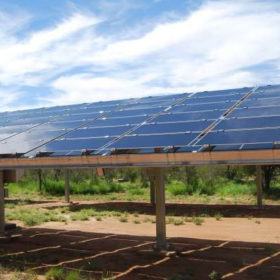
Calyxo files for insolvency
The German thin film solar PV module maker was forced to start the proceedings after an order from a major customer was canceled.

Manz: PV division not affected by Taiwan plant fire
Manz AG today reported a fire at its Taiwan production site. A spokesperson confirmed that its solar PV operations were not affected. No one was injured in the incident, although the amount of damage is still to be determined.
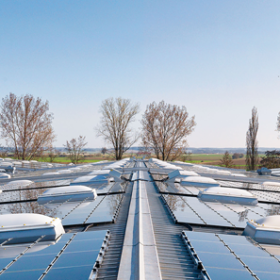
Shunfeng trims net loss, improves sales
The Chinese PV manufacturer shipped 3.85 GW of solar PV products last year, including 37.6 MW of wafers, 1,346 MW of solar cells, and 2,475 MW of PV panels. China was still the company’s largest market, accounting for 74.9% of total sales.
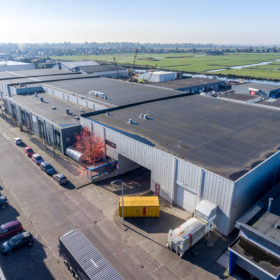
Netherlands’ Energyra starts construction on 100 MW module factory
The Dutch solar PV panel maker has received financial support from the government of region of North Holland, where the manufacturing facility will be located. The first module shipments are planned for the end of 2018.
Solargiga unit to increase stake in PV module maker for $1.6m
Jinzhou Yangguang Energy (Jinzhou Yangguang), a subsidiary of China’s Solargiga Energy Holdings, has agreed to buy a 17.8% stake in Jinzhou Yangguang Motech Renewable Energy (Jinzhou Motech) from Motech Suzhou Renewable Energy for CNY 9.96 million (US$1.58 million), in a cash transaction.

GCL Group, Softbank sign MOU for 4 GW of solar manufacturing in Andhra Pradesh
The Asian companies will form a joint venture in India to execute the plan. The project’s total investment is expected to be around US$930 million, which will be used for the production of solar PV ingots, wafers, cells, modules and batteries.
