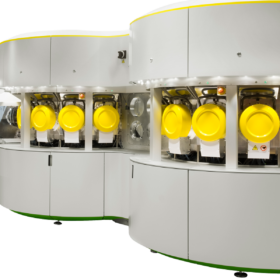
Midsummer secures second order for CIGS production line equipment
Swedish thin-film solar manufacturer Midsummer has secured its largest-ever order for production equipment, covering a complete solar cell factory. It follows an initial order in May 2025 for a 15 MW line producing thin-film copper, indium, gallium and selenide (CIGS) solar cells.
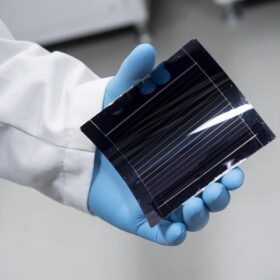
Why CIGS solar keeps lagging behind crystalline silicon
In an interview with pv magazine, Empa scientist Mirjana Dimitrievska explains that the CIGS photovoltaic technology, while promising for efficiency and flexible applications, faces persistent challenges in scaling lab-level performance to cost-effective, high-throughput industrial production, limiting its ability to compete with crystalline silicon. She also emphasizes that long-term stability, reliability, and material sustainability, rather than peak efficiency, are crucial for commercial viability, especially in niche markets like building-integrated and lightweight PV.

Photovoltaics for cattle dung gasification
Researchers tested a solar PV-powered system to gasify dried cattle dung, achieving higher energy recovery than grid-powered setups.Their techno-economic-environmental analysis shows the approach can cut emissions and be economically viable, though system utilization and operational factors strongly affect profitability.
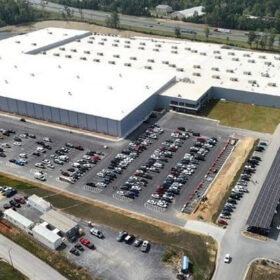
Qcells resumes US solar panel production after customs furlough
Qcells says it has resumed solar panel production at its Georgia manufacturing facilities after US Customs and Border Protection released seven solar cell shipments from South Korea that had been held under the Uyghur Forced Labor Prevention Act (UFLPA), forcing a furlough of 1,000 workers and temporarily halting output at the second-largest module factory in the United States.
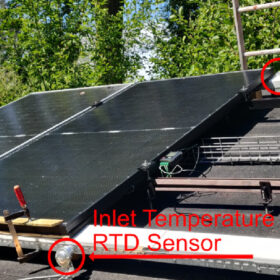
Air-based photovoltaic-thermal system can achieve significant energy savings in buildings
Researchers in Sweden have developed an air-based photovoltaic-thermal system that can preheat ventilation air and domestic hot water, cutting district heating demand by up to 16% for ventilation and 7% for hot water while also reducing peak heating loads in cold Nordic climates.

Freight costs increase following military strikes in the Middle East
Freight costs from the Far East to the U.S. and Europe have increased week-on-week, while almost 150 container ships currently unable to leave the Arabian Gulf due to the risk of sailing through an active conflict zone, according to analysis from ocean and freight rate benchmarking platform Xeneta.
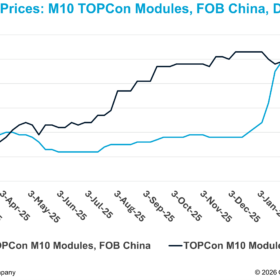
China TOPCon module prices edge higher as March cargoes clear
In a new weekly update for pv magazine, OPIS, a Dow Jones company, provides a quick look at the main price trends in the global PV industry.
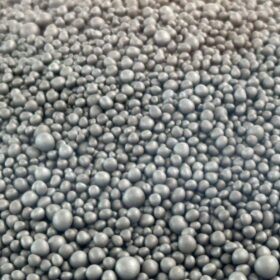
China’s polysilicon prices fall again amid 480,000 MT inventory buildup
Global solar supply chains face renewed price pressure as weak post-holiday demand in China collides with high polysilicon stockpiles, pushing wafer costs lower and weighing on exporters ahead of policy changes.
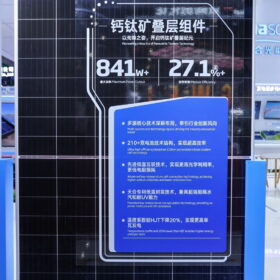
Guidelines to assess three-terminal, four-terminal tandem solar cell performance
Researchers in the U.S. have developed a set of guidelines and protocols to assess the performance of three-terminal (3-T) and four-terminal (4-T) tandem solar cells, including those with subcells made of III–V, CdTe, perovskites or silicon materials.
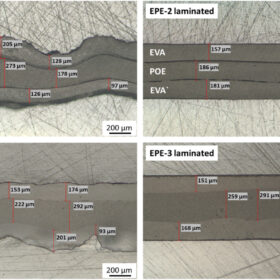
New study challenges current narrative around EPE encapsulants
Austrian researchers analyzed commercial ethylene vinyl acetate–polyolefin–ethylene vinyl acetate (EPE) solar encapsulants and found that products sold under the same label can have significantly different material structures and performance. While EPE offers better moisture barriers and thermal resistance than EVA and is rapidly gaining market share, the study warns that its long-term reliability and behavior vary widely and require deeper investigation.
