Price pressure and delivery bottlenecks lead SMA to significant loss in 2018
The German inverter maker struggled after China’s announcement at the end of May drove down prices and markets around the world and left a clear mark on its figures. Both the commercial PV segment and the storage business fell short of expectations due to delivery bottlenecks.

PV Info Link: Jinko the largest module maker of 2018
According to the Taiwanese analysts, JA Solar was number two, followed by Hanwha Q-Cells and Trina Solar in joint third. The ten largest module makers met around 70% of demand, with 66 GW of shipments.

Rejection of Azure Power bid confirms failure of India’s 10 GW ‘mega-tender’
Delhi-based developer Azure had bid for a 2 GW project on a single site – plus 600 MW of manufacturing capacity – as part of a much-hyped national 10 GW manufacturing-linked tender. The government has decided to reject the bid because it says the quoted price is unreasonable.

India mulls anti-dumping duty on Malaysian solar glass
The government may impose anti-dumping duty of $114.58 per tonne on tempered solar glass imports to provide a level playing field to domestic manufacturers.
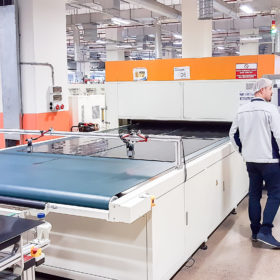
PI Berlin: Asia leading the way for module quality
Quality assurance provider PI Berlin has found the solar industry has made significant improvements to module quality in the past six years and that, perhaps surprisingly, manufacturers in China and South East Asia are setting the standard by producing higher quality modules, on average, than other regions.
Solar will rebound this year with more than 100 GW of new capacity
Wood Mackenzie’s number-crunchers are the latest analysts queueing up to predict a bumper year ahead for PV, with falling prices, rising efficiency rates and booming markets outside China all on the cards. And it could be a make-or-break year for mega-projects, says Wood Mac.
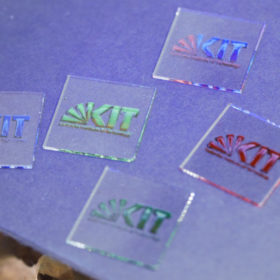
European researchers want to develop digitally printed, highly efficient and stable perovskite PV modules
German and Greek scientists are working with industrial partners on the technological feasibility of making solar modules based on perovskite absorbers. The prototypes should be freely configurable in size, shape and color.
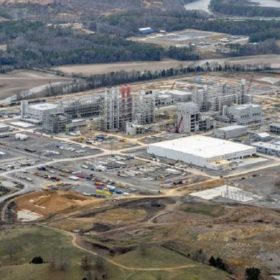
Wacker’s polysilicon business sees profit and turnover fall
The Munich-based chemical company posted an increase in sales but the fall in polysilicon prices last year and the temporary closure of US production after a hydrogen explosion had a significant impact on the results.

Hanwha Q-Cells completes internal going-private reorganization
The South Korean PV manufacturer has finalized its plan to merge with Hanwha Solar. The company will no longer be listed on the Nasdaq stock exchange and will continue as a wholly owned subsidiary of Hanwha Chemicals.

Indian Railways plans to tender 4 GW solar project
The procurement will be worth an estimated $2.25 billion, and will stipulate the use of 1.2 GW of Indian-made equipment. The power generated will replace 4 GW of coal-fired electricity consumption used by the railways.
