
Edison connects large-scale storage system at PV plant in southern Italy
The Italian power provider has implemented its first pilot storage projects linked to solar. The system can provide grid services such as primary and secondary frequency regulation and tertiary and voltage regulation.
PV to take lion’s share of $120 billion annual investment
The impressive growth is unlikely to replace coal-fired power generation as it will only be sufficient to cover the predicted increase in demand for electricity. The electrification of heating, manufacturing and transportation offer room for further development.
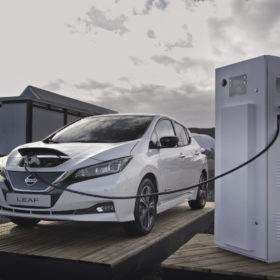
What’s in store for storage? $620bn
The rise of batteries will attract that headline figure in investment up to 2040, say analysts, as exponential growth in EV ownership, falling stationery system costs and the needs of the world’s grid-poor regions combine to boost lithium-ion technology.
Renewables overtake fossil fuels in UK installed capacity
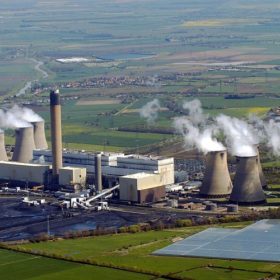
A report published today by U.K.-headquartered energy company Drax says that, for the first time ever, total generation capacity available from renewables has overtaken that of fossil fuels on Britain’s electric grid.
UK storage on the fly with 6.9 GW cumulative pipeline
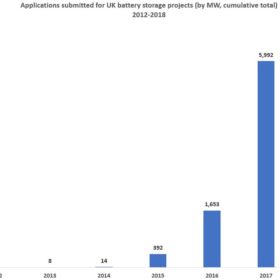
At an event in London, a new tool was presented which lets the user track the UK storage landscape. The market is gaining traction amidst disfavourable policies for solar PV and other renewables from Westminster. The UK’s storage portfolio seems to be growing rapidly.

SolarEdge’s latest quarterly results show robust growth
The inverter maker took number one spot in the US from SMA this year, and acquired majority stakes and IP in uninterrupted power supply company Gamatronic and storage system provider Kokam. While other companies have consolidated, SolarEdge managed to report robust results.
Global operational floating PV capacity tops 1.1 GW
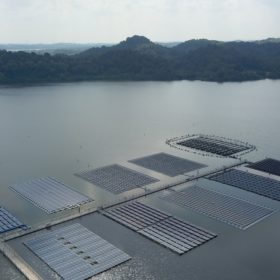
The World Bank says floating PV has the potential for 400 GW of capacity – under conservative assumptions. The authors of a World Bank study say adding floating solar to hydropower plants improves their flexibility while increasing energy yields.
French turn on nuclear opens €45 billion renewables investment opportunity
The French government is expected to show a draft plan on how to achieve nuclear generation reduction plans. After minister Hulot left the government in August, amidst disagreements with Macron’s handling of the nuclear lobby, the parliament has voted for a bill to reduce nuclear generation capacity. If the plans are realized in compliance with the climate targets, solar and wind deployment could grow significantly.
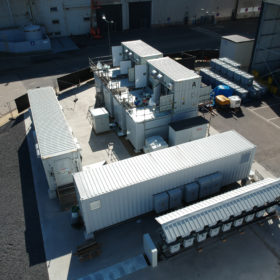
Europe’s largest commercial and industrial PV storage testbed launched
Testing lithium-ion, redox flow, and sodium-sulfur technologies, EPC provider CMI Energy wants to establish which types of system, or which combinations, are most suitable for different applications using the 4.2 MWh facility.
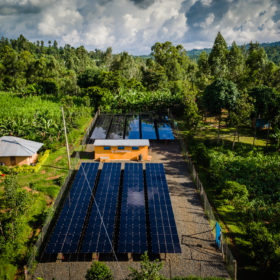
Risk of a ‘bridge to nowhere’ effect in Africa’s electrification
A report from the United States’ Rocky Mountain Institute finds more work is needed on the demand side for microgrids and other rural electrification projects in Africa. Such projects, says the report, often focus on building generation capacity, with little consideration for the ability of end users to make good use of energy.
