The Hydrogen Stream: Africa could become key green hydrogen market by 2050, says Masdar
Masdar says Africa’s annual hydrogen exports could hit 40 million tons by 2050, while Israeli researchers have published a new study on the discharge characteristics of oxidized intermediates formed under water photo-oxidation conditions.
Virtual power plant to trade grid-stability services in New Zealand
New Zealand’s solarZero says it aims to provide fast, sustained reserves with its virtual power plant (VPP) of 10,000 household battery systems. Meridian Energy, meanwhile, has secured approval for a 100 MW battery energy storage system – the country’s largest such system to date.
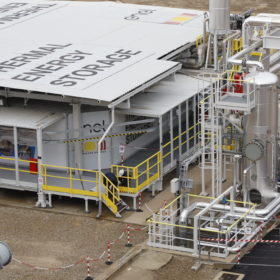
World’s first utility-scale, rock-based storage facility goes online in Italy
Enel is testing a 24 MWh thermal energy storage system that could be used for seasonal renewables storage. The facility uses rocks that store excess energy as heat, then releases that heat to generate steam for electricity.
Neighborhood battery plan to maximize solar benefits in Australia
The government of the Australian state of Victoria has unveiled an ambitious plan to install 100 battery energy storage systems by the end of 2026, as part of a broader strategy to support the rollout of more rooftop solar.
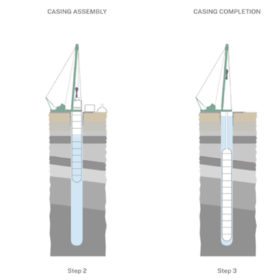
Hydrogen storage in vertical caverns
Australia’s Energy Estate has signed a new agreement with Abergeldie, which designs vertical man-made caverns for hydrogen storage. The partnership will focus on a range of projects, including a 1.6 GW hydrogen network.
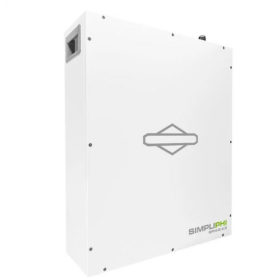
Simpliphi presents integrated storage solution for rooftop PV
Simpliphi, a US-based storage system provider, said its new storage system includes a 4.9 kWh battery and a 6 kW inverter. The solution can be scaled up to 358.8 kWh of storage capacity.
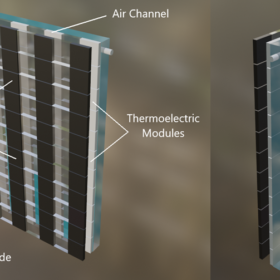
PV-powered thermoelectric cooling for air conditioning in buildings
Scientists have proposed a way to combine thermoelectric modules (TEMs) with rooftop PV to support heating, ventilation and air conditioning in buildings. They designed a wall-integrated TEM to heat and cool adjacent rooms.
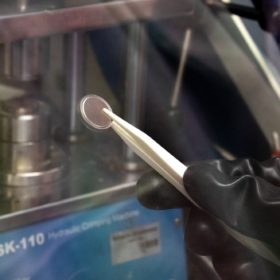
New polymer-based battery electrodes with high stability
UK researchers have developed organic electrode materials to integrate redox-active organic molecules into long-chain polymers. The new electrodes exhibit better cycling performance in lithium-ion batteries, with no apparent capacity decay over more than a thousand charge-discharge cycles.
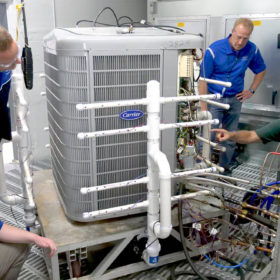
Air-source heat pump for harsh, cold climates
Carrier will soon begin field tests for a prototype air-source heat pump for cold climates. It is designed to provide high-efficiency heating performance in harsh climates with temperatures equal or below negative 29 degrees Celsius, while being grid-interactive. The US-based heating tech specialist expects to commercialize the solution by 2024.
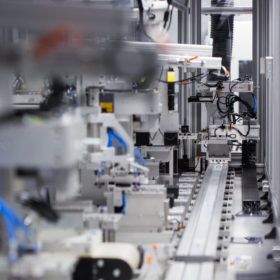
Semi-solid flow battery tech promises to lower production costs by up to 40%
While still using conventional lithium-ion raw materials, 24M’s technology is said to reduce the number of steps required to manufacture battery cells and thereby the cost by up to 40%. The US company’s SemiSolid design is also said to deliver improved energy density, safety and recyclability.
