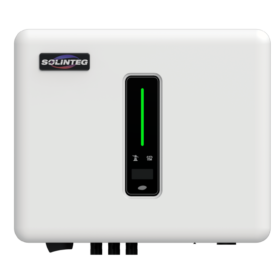
Solinteg launches new residential hybrid inverter series
Solinteg’s new hybrid inverters come in seven versions with nominal power ranging from 3 kW to 9 kW, an efficiency rating of 97.6%, and a European efficiency of 97.0%. They measure 534 mm × 418 mm × 210 mm and weigh 27 kg.
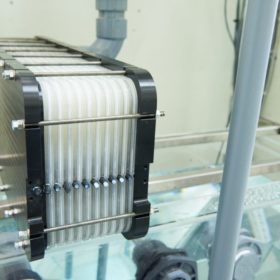
Zinc8 to manufacture its first zinc-air batteries in US market
Canadian battery developer Zinc8 Energy Solutions has announced plans to begin battery production in the United States, incentivized by manufacturing production credits in the US Inflation Reduction Act.
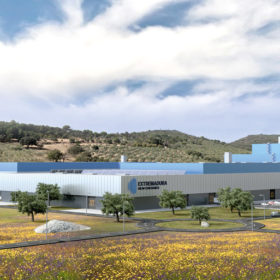
The weekend read: The need to achieve autonomy in energy
At the beginning of June 2021, during a meeting with Spanish businesspeople organized by the Portuguese-Spanish Chamber of Commerce, the Portuguese Prime Minster António Costa urged his neighbors to work on jointly exploiting the potential of plentiful lithium reserves found on the Iberian Peninsula. As Luis Ini reports from Madrid, his words reflect an increasingly evident reality: the need to achieve autonomy in the field of energy, especially in energy storage.
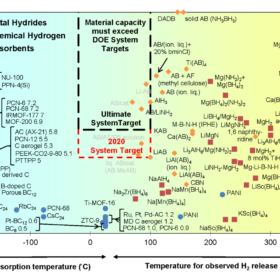
Solid-state hydrogen storage techniques at a glance
Scientists compared hydrogen storage techniques and found that physical methods are closer to commercial feasibility, while materials-based techniques have strong potential.
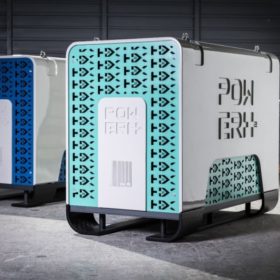
Australian startup releases new hydrogen generators
H2X Global has released the first of its hydrogen-powered generators in the Australian market.
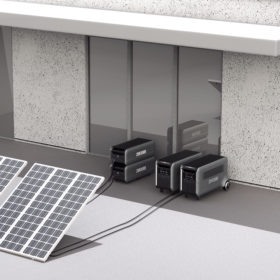
US startup unveils plug-and-play solid-state battery for residential applications
Zendure has developed a residential storage system using a semi-solid state battery with 6.438 kWh capacity. Each unit is scalable with up to four batteries, bring the capacity of one unit to 32 kWh and of two units to 64 kWh. The system can be used with solar panels.

Hydrogen bromide flow battery for large-scale renewables storage
Dutch startup Elestor has secured funds to bring its hydrogen bromide (HBr) flow battery technology closer to commercial production. It said the system could achieve a levelized cost of storage below $0.05/kW.

Micro hydropower system for building applications, usable with solar
Japanese startup Yumes Frontier has developed a 2.7 kW micro-hydropower system that can be used in some buildings. It can also be combined with solar to provide power for lights and surveillance cameras.

India’s Reliance Industries presents scaled-up solar, battery ambitions
Reliance Industries says that production will begin at its 10 GW factory for solar cells and modules by 2024. It plans to double the facility’s capacity to 20 GW by 2026 and is aiming for 50 GWh of annual cell-to-pack battery capacity by 2027.

Aluminum-sulfur battery for small-scale storage at $8.99/kWh
Massachusetts Institute of Technology researchers have developed a battery with two electrodes made of aluminum and sulfur, and a molten salt electrolyte placed between them. They said the sulfur electrodes with a high loading of 12.0 mg cm2 can sustain a high capacity of 520 mAh g–1 over 100 cycles at 5 C.
