Bromine-based flow batteries for renewables storage
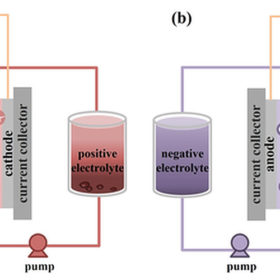
Bromine-based flow batteries have the potential for high energy density in renewable energy storage. Their commercial adoption, however, remains challenging due to the cathode materials used for their construction. New research from China seeks to shed light on how to overcome these hurdles.

Battery fire at Salt River Project in the US
Fire crews in Chandler, Arizona, sent robots into a building at the Salt River Project where a 10 MW battery was smoldering.
The Hydrogen Stream: Fuel cell that uses iron instead of expensive platinum
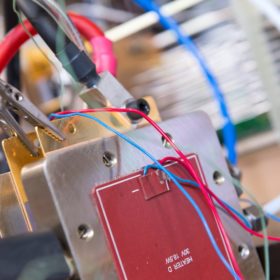
In other news, Hydrofuel Canada developed hollow hybrid plasmonic nanocages to create an electrocatalyst for ammonia synthesis from nitrogen (N2) and water (H2O) and said green hydrogen could be separated from this ammonia and sold at about $1.50 per kilogram. Furthermore, Norway’s Aker Horizons and Statkraft are exploring green hydrogen and ammonia production opportunities in India and Brazil, targeting local steel and fertilizer industries.
Australian town to be powered by pumped-hydro microgrid
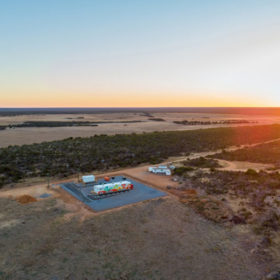
The town of Walpole on Western Australia’s southernmost tip will soon be powered by a pumped-hydro microgrid, a first for the state which is already renowned for its rollout of microgrids and distributed renewable solutions.
Long-duration storage solution based on saltwater
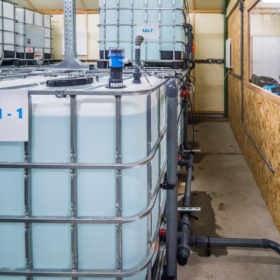
Developed by Dutch start-up AquaBattery, the storage technology is claimed to independently amend power and energy capacity. The battery system utilizes three storage tanks, one with fresh water, one with concentrated salt water and one with diluted salt water, and also relies on membrane stacks.

New method for long-term prediction of renewables generation in Europe
Developed by scientists in Spain, the new methodology is claimed to be capable of mitigating energy crises in Europe through climate predictions.
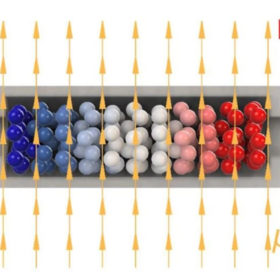
The Hydrogen Stream: Magnetic alloys for efficient hydrogen cooling
While a Japanese team developed a series of Er(Ho)Co2-based magnetic cooling alloys for hydrogen cooling, a US research team used a “simple” acid treatment to increase flow of hydrogen atoms within protonic ceramic electrochemical cells (PCECs). Hydrogen-fuelled mobility registered significant developments: the first hydrogen-electric passenger aircraft was piloted between two major airports in Germany, and a 75-passenger ferry service in the San Francisco Bay braces for operations in June.
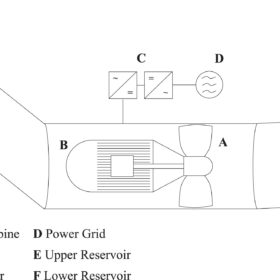
Pushing the boundaries of low-head pumped hydro storage
Two different studies have highlighted the potential and challenges of low-head pumped hydro storage (PHS), which has so far never been implemented in real projects. Different main areas were identified for future research and an interesting levelized cost of storage was indicated for certain project configurations.
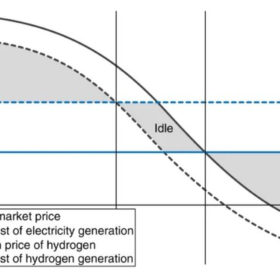
Reversible fuel cells for backup power generation
Reversible fuel cell systems based on solid oxide cell (SOC) technology may become an efficient tool to cope with price volatility in the energy market, according to new research from Stanford. Through the proposed model, which mainly considered the electricity markets in Germany and Texas, the research group found that the reversible system may be competitive at current hydrogen prices, provided that there is sufficient variation in daily electricity prices.
Fluid gas market situation casts shadow over EU energy system models
With each of the 10-year network development plans produced by Europe’s electricity transmission system operators years in the making, the latest such publication may already be out of date as the bloc prepares to fast forward its energy security and climate change ambitions.
