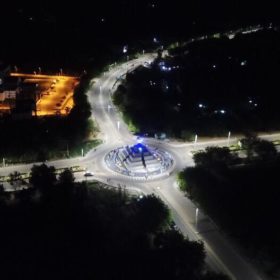
Nigeria taps mini-grids to power universities
Four Nigerian universities are in the final stages of abandoning the country’s main grid to be fully powered by mini-grids. Nigeria aims to use more mini-grid technology to power its people by tapping a $550 million World Bank loan.
Researching some cool new battery materials
Scientists from China and the United States have developed an additive for electrolyte materials they say could improve the operating temperature range for lithium-ion batteries, allowing them to operate down to minus 40 degrees Celsius without compromising performance at temperatures up to 60 degrees Celsius.

Akasol plans to build new battery factory near Detroit
The German battery manufacturer will make products for electric trucks and buses at the facility, which is expected to employ 200 workers and produce 400 megawatt-hours of batteries annually.
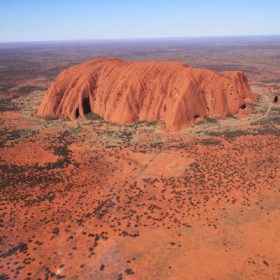
Pre-assembled concept proposed for 10 GW Australian PV project
Singapore’s Sun Cable is eyeing up what would be the world’s biggest solar project by some distance. Australia’s Northern Territory government is on board with the plans and an environmental approval application is in the works. Project plans include deployment of the 5B pre-assembled array concept.
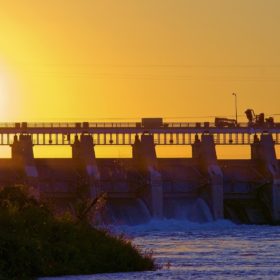
Renewables and geopolitics: water and sun pivots to new world order
In our series of renewable energy and geopolitics interviews, Indra Øverland – head of the Center for Energy Research at the Norwegian Institute for International Affairs – explains why hydropower can be the perfect match for intermittent renewables such as solar and wind. Hydropower assets are one of the biggest geopolitical stories of the energy transition but receive almost no attention. Nations with strong hydro potential may become linchpins of regional renewable energy.
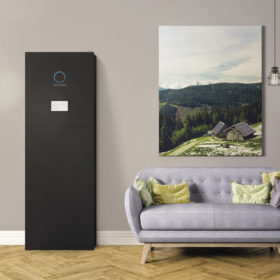
Another €4.4 million for solar-plus-storage incentives in northern Italy
After earmarking €3 million last year and €4 million in 2017, the Italian region of Lombardy has decided to further support residential and commercial storage projects linked to renewables.
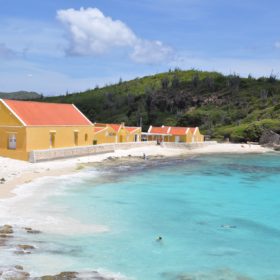
Wärtsilä doubles renewable energy penetration by adding storage in holiday paradise
The Finnish company has commissioned a large scale storage project to reduce curtailment of wind and solar assets on Bonaire. The system will use machine-learning based energy management software to provide grid services and manage all of the island’s power generators.
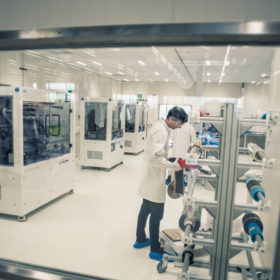
Solid (state) plans announced by imec
Belgian research institute imec this week said it has set a performance record of 400 watt-hours per liter – at a charge rate of 0.5 – for a solid state lithium metal battery. The institute says it is working with the University of Hasselt to scale up production of solid state cells on a pilot line in Belgium.
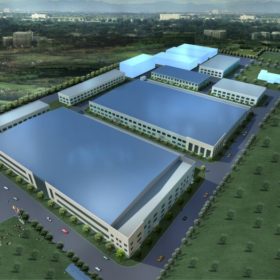
Comtec sells slice of EV unit to online gaming company The9
The Nasdaq-listed game developer will offer shares in return for a 9.9% stake in the Chinese mono solar manufacturer’s Kexin electric vehicle and storage business.
Statera announced as partner on 1 GW virtual power plant in the UK
Norwegian hydropower company Statkraft has revealed more details of its solar-storage-wind-gas network. Previously announced plans to potentially double capacity this summer were not mentioned in the update.
