
Spain’s Genera event dominated by PV as it draws the crowds
Spain’s most important renewable energy fair is becoming increasingly about solar. After a decade of slim pickings, last year’s event promised better times and, if this year’s show didn’t completely deliver, that’s because elections loom large.
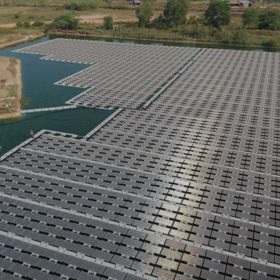
Floating PV offers alternative to grid outages in South Africa
A 60 kW floating array was deployed by New Southern Energy at the reservoir of a fruit farm near Franschhoek, in the Western Cape Province. A second phase of the project will also include storage.
Analysis: Siemens’ entry into distributed generation works for Kaco too
Having launched a residential storage system, the German giant announced plans last week to acquire inverter maker Kaco and start a new smart infrastructure business from April 1. In light of those moves, pv magazine spoke to IHS Markit’s Cormac Gilligan about the new kid, albeit huge, on the block.

India goes into overdrive with 6 GW tender plans announced in five days
SECI, the organization responsible for coordinating India’s push for 100 GW of new solar capacity by 2022, has had a busy week. But, as last year illustrated, tenders alone are not always a guarantee of new generation assets.
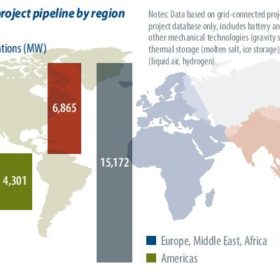
Global battery storage pipeline reaches 15 GW
As data drifts in, 2018 is shaping up to have been a record-breaking year for battery energy storage, writes IHS Markit senior analyst Julian Jansen. Especially for front-of-the-meter projects, which experienced rapid growth. This growth was led by significant activity in South Korea, the United Kingdom, the United States, Australia, and China, which together accounted for 78% of battery energy storage projects commissioned in 2018, according to the Q4 2018 edition of the IHS Markit “Energy Storage Company and Project Database.”
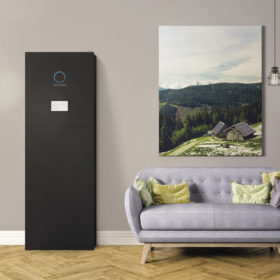
The weekend read: Just look who is closing ranks!
Owners of residential PV systems increasingly want more features. Virtual power plants, smart EV charging and self-consumption measured by ever higher percentages of self-sufficiency have been buzzwords in the industry. The result has been a new breed of smart bidirectional inverters, sometimes dubbed hybrid inverters. And with utilities having found business models that also work out in their favor, could a new dawn of residential installations rise over the world of suburbia?

Can you hack the grid using an inverter?
Maybe. But you’d be better off using a laptop. And no, Huawei inverters aren’t going to cause a blackout.
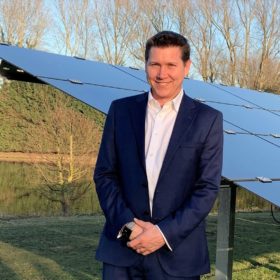
Gridserve to deploy 60 MW of bifacial-plus-tracking projects in the UK
Two sites with capacities of 34.7 MW and 25.7 MW will supply unsubsidized power to Warrington Borough Council. The smaller project will provide the local authority’s energy needs and reduce its electricity bill while the larger one will sell renewable energy on the open market, further bolstering council income.
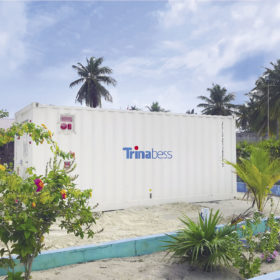
Storage Highlights Countdown #4; 27 microgrids for the Maldives – Trina Solar
In the run-up to the Energy Storage Europe conference pv magazine is featuring the top ten developments in the field as our Energy Storage Highlights, selected by an independent jury of experts. Yesterday we entered our top five, with MAN’s thermoelectric energy storage.
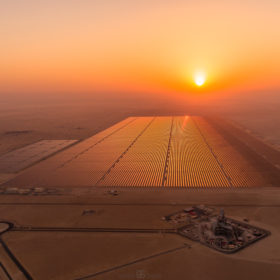
Dubai’s DEWA seeks proposals for phase V of 5 GW Mohammed bin Rashid Al Maktoum Solar Park
The utility has issued a request for qualification for a further 900 MW of PV at the huge solar park, which is set to reach a total capacity of 5 GW.
