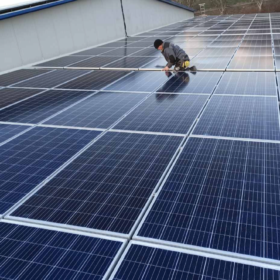
IFC says green recovery could drive $2.5tn renewables market this decade
The private-sector arm of the World Bank, which claims to leverage $3 of its own capital and $8 from third parties for every dollar invested in its blended finance funds, has attempted to quantify what devoting Covid recovery funds to green investment would mean for emerging economies.

EU cash will fund solar lights for fishers
Pending final closing, the Electrification Financing Initiative has announced it is considering private equity investments of €1.5 million to two French firms operating in Benin, Togo, Burkina Faso and Senegal, and $1.5 million to a Tanzanian business operating in Tanzania and Uganda.
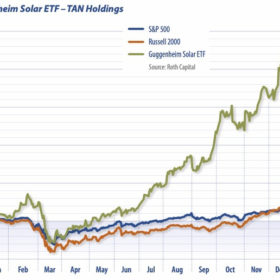
Guggenheim Solar Index: More to come in ‘21
With the wholesale transformation of the power industry from the inside out and other energy transition mega-trends, capital will continue to flow into renewables from ESG, energy funds, and retail, writes ROTH Capital Analyst Jesse Pichel. Look for a greater mix of unsubsidized economic solar projects to support improving revenue visibility, increasing earnings quality, and multiple expansions.
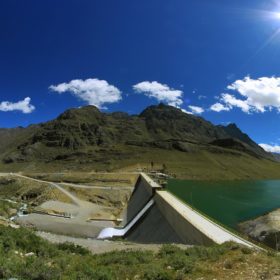
The case for floating PV on hydroelectric facilities
A study has analyzed the technical and financial feasibility of floating solar at hydro power plants. The report concludes floating PV reduces evaporation from hydropower reservoirs and the water saved can be used to generate more electricity.

Peeking into 2021: Green bonds to reach US$500 billion per year, solar on track to outrank oil and gas
Global management consulting firm PricewaterhouseCoopers has issued a general economic prediction for 2021. Aside from some general notes on GDP recovery post-Covid, the analysts’ notes were heavily focussed on climate and energy finance and policy.

Bangladesh mandates 2% of loans issued must be for green projects
Some 15% of the finance disbursed must fit the wider definition of being ‘sustainable’ and banks and other lenders have been warned penalties will be applied for non compliance.

GCL dilutes stock as senior note deadline approaches
Parent company hopes to raise $535 million from the move with $500 million worth of three-year senior notes owed by its solar project business due to mature on January 30.
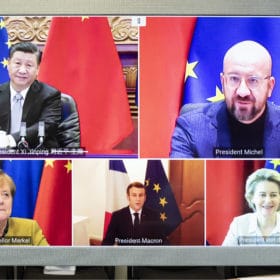
EU-China Comprehensive Agreement on Investment opens manufacturing options, dodges forced-labor issues
The European Commission has finalized its long-anticipated investment agreement with China. While some renewable energy businesses might benefit from improved investment security, IP protection and access to legal remedies in China, the Commission did not address the issue of Uyghur forced labor in China. As a majority block in the European Parliament had previously demanded from the Commisison to develop a firm policy to end forced labor in China, there is reason for doubt that the agreement as it stands will be adopted by the EU Parliament.

Total corporate funding into solar sector rose 24% in 2020
Despite a slow start and a downturn in venture capital and private equity funding, total funding saw a significant rise, including the largest amount of projects acquired in a single year to date and the largest amount of securitization financing ever in a year.

Saudi Arabia commissioned no solar projects last year
Plunging regional solar tariffs reportedly prompted attempted renegotiations of agreed solar power prices with the result the kingdom made no progress towards its renewable energy goals in 2020.
