
Turkey’s 1 GW Konya project in doubt
Project partners Hanwha Q Cells and local company Kalyon Enerji appear to have ended their partnership and to be negotiating the terms of a ‘divorce’.
REC Silicon to suspend production at Moses Lake poly factory
Norway-headquartered REC Silicon has revealed plans to halt operations at its Moses Lake facility in the U.S. in 17 days’ time. The company says it has taken the decision to maintain liquidity for its semiconductor business with American workers set to pay the price for President Trump’s trade war with China.
Renewable energy investment to increase by $210 billion over five years
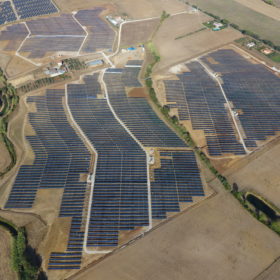
Backing for renewable energy assets is set to rise 10% with grid-scale PV the most attractive opportunity among investors surveyed for a new report. But improved investment vehicles and outsourced asset management are still needed if climate change is to be mitigated.
Understanding bifacial boost
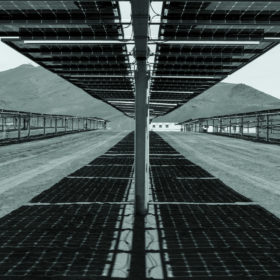
Belgian research institute imec has developed a new simulation framework it says can calculate the expected output of a bifacial PV system. The model could help improve developer understanding of the best system configurations for bifacial, and foster confidence among investors by providing a precise prediction of energy yields.
PPA-backed solar roll-out sees £20 million pledge in the UK
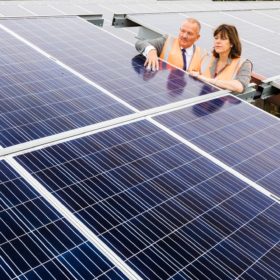
NESF and Zestec have joined forces for the development of a commercial portfolio in the U.K. NESF provides the capital, which will be refinanced through the proprietary PPA model by Zestec.
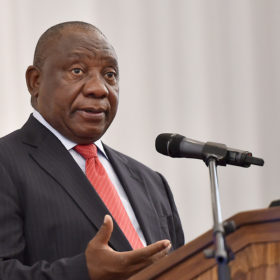
South African renewables may be boosted by plan to privatize utility
President Cyril Ramaphosa has announced a plan to rescue state-owned power company Eskom by separating it into three units. According to consultants Frost & Sullivan, although that may not be enough to completely address the utility’s financial crisis it may further encourage investment in renewables.
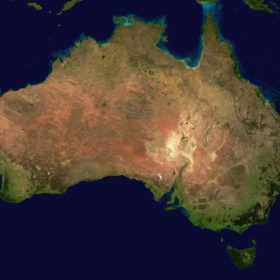
Australia on track for 50% renewables by 2024, at “zero net cost”
Clean energy is driving the country to its Paris commitments well ahead of schedule. The Australian National University published findings today that conclude Australia is on track to hit 50% renewable electricity in 2024 and 100% in 2032 – at a net cost “of approximately zero”. Despite the good news, the Clean Energy Council warned federal policy may see the opportunity squandered.

Russian Duma approves net metering for solar up to 15 kW
Under the new rules, expected to come into force by the end of the year, Russian residential PV system owners will be able to sell excess power to the grid. The provisions were discussed for almost two years before yesterday’s vote.
India prioritizes domestic products in plan for 12 GW of new solar
The Indian Cabinet Committee on Economic Affairs has approved a plan for projects to be enabled by public bodies in the hope that avoiding competitive procurement will enable it to circumvent WTO rules related to import parity.
Sale and repurchase deal – is GCL New Energy scrabbling for funds?
With a RMB21.4 billion chunk of its huge debt pile reportedly set to fall due for repayment in July, ownership of four PV projects with a total 80 MW capacity is due to transfer back and forth as the developer tries to sweat its solar assets.
