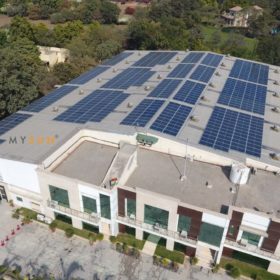
Argentina issues secondary legislation for distributed generation
The new decree, which regulates the law for DG promulgated at the end of 2017, is intended to support distributed generation of renewable energy sources under net metering. The fund for DG, though, has shrunk by half in value thanks to currency depreciation.

Xinyi Solar plans to float PV project operations unit to finance glass production expansion
Parent company hopes to receive a $392m windfall – half of it upfront – by offering shares in its solar farm operations unit and then using the net profits to sell the newly-spun out business its six-project PV portfolio in China.
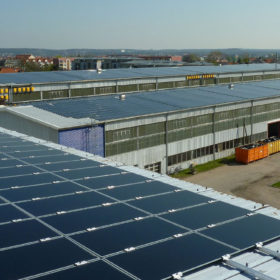
Germany plans 20% FIT cut for commercial and industrial solar
With the ruling coalition having agreed to extend additional tenders for PV and wind power, a related, draft bill by the Federal Ministry of Economics has been disclosed. The policy document includes a proposal for a 20% FIT reduction for solar installations ranging in size from 40 kW to 750 kW.

Scatec Solar raises the stakes in South African PV
Norwegian developer Scatec has upped its holding in three operational PV projects in South Africa. Each of the plants is operating under a 20-year PPA with utility Eskom. Scatec’s investments in the country are secured by guarantees from the World Bank Group.

Korea to build world’s largest solar park
President Moon Jae-in yesterday announced plans for a 3 GW project. South Korea plans to add 30 GW of PV by 2030, to improve the country’s hitherto poor renewable energy performance.
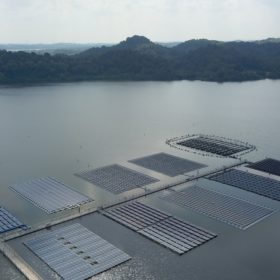
Global operational floating PV capacity tops 1.1 GW
The World Bank says floating PV has the potential for 400 GW of capacity – under conservative assumptions. The authors of a World Bank study say adding floating solar to hydropower plants improves their flexibility while increasing energy yields.

Azure Power agrees $0.035 tariff for 300 MW project in India
The developer will supply energy to India’s largest utility under a 25-year PPA and can build the project anywhere in the nation, with construction to finish in early 2021.

SoftBank and Essel to develop 500 MW solar park in India
A failed association with IL&FS has failed to deter SoftBank from its plan to invest a staggering $1tn in Indian solar by 2030. Now the Japanese funding giant is working with Essel Infraprojects on a 500 MW plant, with further details yet to be revealed.
Naturgy finances Brazilian PV projects through $71.5m bond issuance
The Spanish gas and power provider will use the funds to build the Sertão I Solar and Sobral I Solar projects, with a combined capacity of 68 MW.
French turn on nuclear opens €45 billion renewables investment opportunity
The French government is expected to show a draft plan on how to achieve nuclear generation reduction plans. After minister Hulot left the government in August, amidst disagreements with Macron’s handling of the nuclear lobby, the parliament has voted for a bill to reduce nuclear generation capacity. If the plans are realized in compliance with the climate targets, solar and wind deployment could grow significantly.
