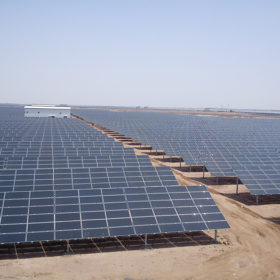
India set to add almost 60 GW of new solar by 2023
A combination of national, state and public body commitments could see the amount of PV added nationally treble on the last four-year period. But even with a new 7-8 GW added, rooftop solar will still be bringing up the rear.

PV InfoLink publishes H1 2018 global PV cell/module shipment ranking
PV InfoLink has released its latest solar PV module shipment ranking for H1 2018. Chinese manufacturers continue to dominate the market, while monocrystalline module shipments increased sharply. Overall, it forecasts total PV demand of 83 GW in 2018.
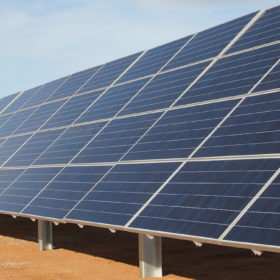
SunPower borrows $110 million to refinance
The PV manufacturer plans to pay off the high-interest ‘mezzanine loan’ with revenue from its residential lease portfolio.

Meyer Burger posts positive earnings for first half of 2018
The solar manufacturing equipment maker has posted an EBIT of US$15 million for the six-month period. It marks a return to profitability for the Swiss company, after major restructuring and cost optimization programs over the past 18 months.

Nissan Brazil and Federal University of Santa Catarina to cooperate on second-life EV battery research
As the global EV market grows, manufacturers are seeking new revenue streams for used EV batteries. Applications in grid and residential storage systems have become popular. The market for second-life EV batteries is expected to reach $4.2 billion by 2025.

1.4 GW NordLink interconnector receives €100 million EIB hybrid securities purchase
The project connecting Germany and Norway was first conceived in 2015. The 624 km undersea cable will have a capacity of 1.4 GW, when operational in 2020. The EU is supporting the project and other grid infrastructure projects through its EFSI scheme to interconnect the European energy markets, for better renewable energy integration and improved security of supply.

Increased shipments, falling revenues for Canadian Solar in Q2
Module manufacturing giant Canadian Solar shipped 1.7 GW of modules in the second quarter of 2018, a 23.7% increase on the previous quarter, according to the company’s latest update. Net revenue, however, fell more than 50% quarter-on-quarter with the company blaming fewer project sales and lower module prices.
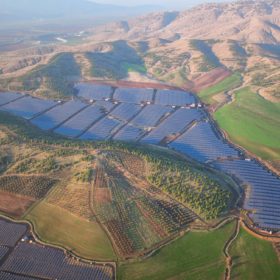
Mixed reaction from solar industry to plunging Turkish currency
As the lira’s troubles continued to weigh on the markets today, it remained unclear how the country’s solar market will be affected. While the plunging currency fosters uncertainty – public enemy number one for investors – it could also create conditions for lower system costs and cheaper PV projects. Nevertheless, a serious slow-down for 2018 must be considered.
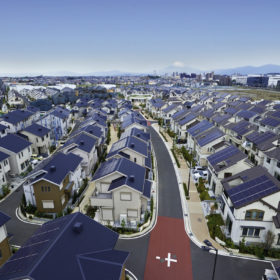
Japan’s PV sector should focus on future energy mix target — report
The Japanese PV industry should respond to the government’s recent decision to leave its 2030 energy mix targets unchanged by pushing for a higher share of solar in the next version of the country’s strategic energy plan, according to a new report.
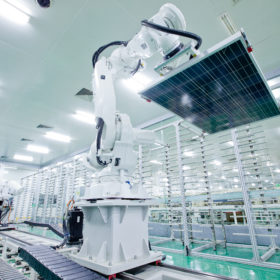
Jinko sees Q2 profits slightly increase, confirms shipment outlook for fiscal 2018
The Chinese manufacturer has seen its revenue decline significantly in the second quarter of this year, despite quarterly shipments dropping just 3.1%. This performance, which confirms a trend that was already clear in fiscal year 2017, was mainly due to lower solar module ASPs. Quarterly net profit, however, has more than doubled. Despite recent developments in the Chinese PV market, the company maintains its shipment outlook for full fiscal year 2018, in which it hopes to ship between 11.5 GW and 12 GW.
