
Chinese developer may lose $140m paid out in speculative project development rights
Bailed-out solar project company Panda Green revealed it did not set any terms for repayment of RMB1 billion paid to third parties in 2017 as deposits to secure potential project rights.
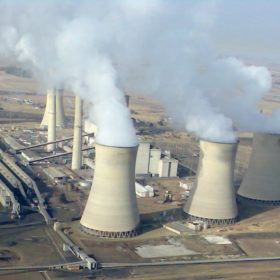
Eskom launches tender to ‘repurpose’ coal plants with low-carbon growth tech
The debt-saddled South African utility has issued an expression of interest to seek proposals on how to refurbish three fossil fuel power plants to be decommissioned in the current decade. Eskom said that all of the proposed solutions should be at the tech-readiness level.
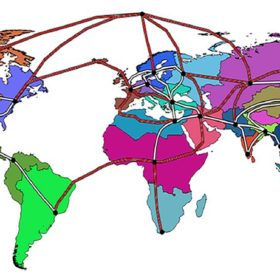
Global supergrid vs. regional supergrids
Researchers from Finland’s Lappeenranta University of Technology have assessed the economic advantages of a fully interconnected global network. They found that an international grid could contribute to a global LCOE of €52.50/MWh. The higher complexity of such a system, however, would only be marginally compensated by additional economic benefits.

First Solar signs PV-plus-storage PPAs with community choice aggregators
Community choice aggregations are U.S. government entities that procure electricity on behalf of retail electricity customers within a geographic area. Power will be provided by the First Solar-developed Rabbitbrush project under a 15-year contract.
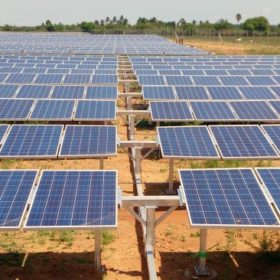
Covid-19 pandemic puts 150 GW of PV, wind at risk in Asia
Up to 150 GW of PV and wind projects could be postponed or canceled throughout the Asia-Pacific region by 2024 if the coronavirus-triggered recession continues beyond the current year, according to new research by Wood Mackenzie.

Covid-19 weekly briefing: A cold wind for APAC renewables, respite for Indian developers and another salary cut for SunPower execs
The coronavirus epidemic continues to batter the global economy, including the solar industry, but falling demand during lockdowns has brought negative energy prices as well as helping drive record solar generation, amid less-polluted skies.
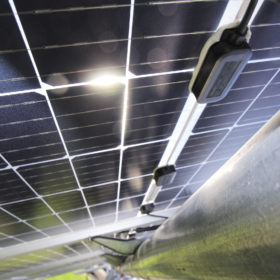
Nextracker the largest tracker provider in 2019
The ten largest solar tracker companies accounted for 88% of the market last year, according to analyst WoodMackenzie, with the market growing 20% from 2018.
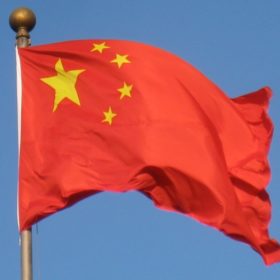
Beijing bail-out saved the day for Chinese solar developer
A rebranded Singyes Solar was able to stave off a debt default meltdown last year thanks to a $200 million cash injection from the state but the turnaround appears to have come at a hefty cost in longer-term borrowings and employees.

More than 100 GW of solar in the Netherlands? Possible by 2050
Solar capacity is expected to grow to unthinkable levels in the tiny country, according to a new report by Netbeheer Nederland. Under one scenario in which regional governments and companies would take the lead in the energy transition, cumulative solar capacity could reach 125 GW. Under a second scenario, in which growth would be driven by the central government, total PV capacity could hit 106 GW.
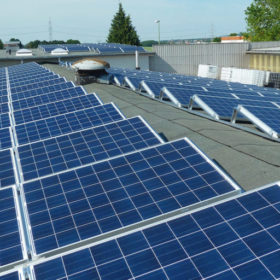
Germany has 200,000 solar-plus-storage systems
EuPD Research estimates around 65,000 energy storage systems linked to rooftop PV were installed last year thanks to increasingly popular solar arrays and electric vehicles as well as rising electricity prices.
