E.on switches UK residential offering to 100% renewables
The 3.3 million U.K. households that get their electricity from E.on will receive only renewable energy. The company referred to a public opinion poll as a motivation for the move.
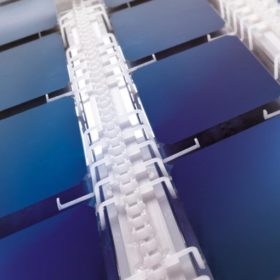
German PV equipment suppliers export 99% of their products
First-quarter figures from German engineering association the VDMA showed that, while orders picked up after a slow end to last year, almost all PV production equipment produced in the country is shipped abroad, with China the leading destination.

This could be a watershed year for renewables in the mining sector
As one of the most energy-intensive industries, the ‘resource sector’ is getting serious about adding cheap solar and wind energy into its mix, to boost returns. Although still predominantly underpinned by gas or diesel, mine operations are increasingly deploying hybrid solutions, highlighting the potential of renewables – particularly as momentum builds for green hydrogen to play a role in future microgrids.
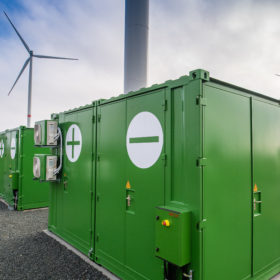
When the battery is a building… or vice versa
AES has announced the start of construction of its Alamito Energy Center, a 100 MW/400 MWh battery for electric utility SoCalEdison which is being constructed as a full-on building – much like a data center.

ABB exits solar inverter business
This Swiss giant is following a trend as large multinational high-tech companies see their role as redesigning infrastructure rather than supplying inverters at ever lower margins. Schneider Electric has pulled out of large scale solar, Siemens’ Kaco acquisition and Junelight launch show increasing interest in the C&I and residential markets, and GE is likely to divest its power conversion business due to low profit margins in that sector.
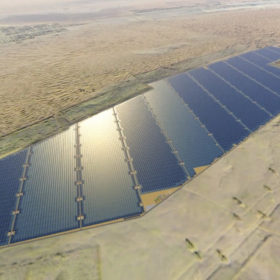
IHS Markit: Global EPC market grew 34% last year
China’s slowdown in installations last year was more than made up for by expansion elsewhere, according to IHS Markit. The news comes amid increasing market fragmentation – with the biggest engineering, procurement and construction business boasting less than 3% market share – and internationalization, with almost half of the top 15 companies operating across more than one region.

Solar financing up but policy support is still crucial
Talk of ‘grid-parity’ and ‘subsidy-free’ solar has had industry figures cherishing the ideal of a sector that can operate free of the caprices of government but a peer behind the latest global PV funding figures demonstrates just how dependent on policy the solar industry remains.
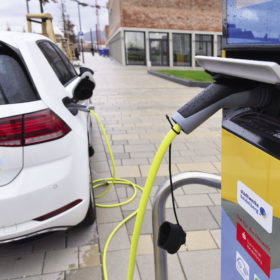
Electric vehicle announcements point way ahead for UK transport – with or without government support
Two of the nation’s largest commercial fleet operators have pledged to go all-electric by 2030, beating the government’s ambition by a decade, and carmaker Jaguar Land Rover has made a big electrification announcement – but insisted the politicians need to show similar bold ambition.

Total Eren breaks ground on 128 MW of solar capacity in Kazakhstan
The Kazakh solar market is steadily growing amid investment from regional development banks and independent power producers. Total Eren said the 128 MW of generation capacity is just the first of its projects in central Asia.

Osaka Gas opens up corporate PPA shop in Thailand
Thailand’s solar market had ground to a bit of a halt after FITs were cut. Osaka Gas has launched a joint venture with Energy Pro Corporation to market commercial and industrial PV arrays under corporate power purchase agreements.
