
PV investors in Honduras facing retroactive review of solar tariffs
The government of the Central American country with the highest installed PV capacity wants to renegotiate contracts awarded in 2015 under an incentive regime. While domestic companies have reportedly agreed to reduce tariffs, international investors are said to be in no mood to capitulate.
IEA warning against stagnation of renewables
After two decades of growth, the amount of newly installed renewable energy capacity is no longer rising and, despite a 7% growth in electricity generation from clean energy sources, global energy-related carbon emissions have risen 1.7%.
Longi claims new record for bifacial half-cut module as production equipment orders pour in
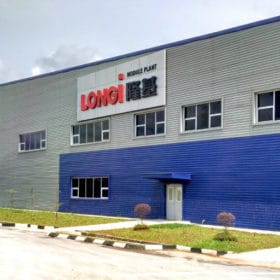
The Chinese monocrystalline panel maker said its 72-cell bifacial product has reached an ouput of more than 450 W on the front side. The result was confirmed by Germany’s TÜV-SÜD.

Swedish Energy Agency eyes PV to achieve 100% renewables by 2040
Though PV will remain in the shadow of wind and hydropower in the north of Europe, an ambitious solar deployment scenario in Sweden could lift the market into the gigawatt club through to 2040.

Trump tariff increase to have limited effect on U.S. solar market
Most large manufacturers supplying the inverter market have diversified production outside of China, but this will affect Huawei and other Chinese inverter makers, as well as U.S. module makers.

Ethiopia announces procurement for 500 MW of solar
Developers have until May 29 to register for the first stage of the process to procure four solar projects. With work under way on the second round of the IFC’s Scaling Solar program in the nation, 12 bidders have been identified to compete for the two projects previously offered under the initiative.
Battery storage market will be worth $13 billion by 2023
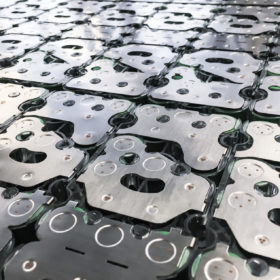
Analyst Globaldata says falling system prices, and the need for more resilient grids and favorable policies, continue to fire the energy storage industry around the globe and the Asia-Pacific region is likely to remain the biggest market.
Trump’s trade war tweets badly timed for Chinese solar manufacturers
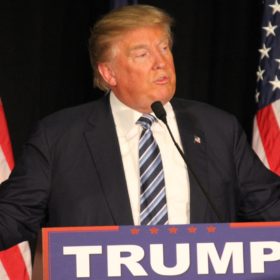
Latest tirade may simply be a crude bid to up the ante with a high-profile Chinese deputation due to visit the U.S. in the latest round of trade talks this week but its timing is worrying for the Chinese solar companies struggling under huge debts.

Shunfeng’s steadily rising revenue cannot distract from its debt worries
Straining under a $2 billion debt mountain, the solar manufacturer is pinning its hopes on the proposed sale of its Jiangsu Shunfeng subsidiary to prevent it suffering the same fate as the original parent company of the Wuxi Suntech unit that makes up part of the Jiangsu division.

How is Tesla selling residential solar for less than $2 per watt?
High-profile CEO Elon Musk has delivered on his promise to slash prices for residential solar. And the company’s reduction of prices to as low as $1.75/W after the federal tax credit is applied is likely a result of the move to online sales.
